
At Randolph College, a simple idea to make health and wellness resources more accessible is beginning to spread across campus.
What started as a Resource Station in the Dean of Students Office is growing into a network of stations in spaces students already visit. Additional Resource Stations are beginning to pop up in the Student Engagement Office, the waiting room of the Terrell Health & Counseling Center, and the Title IX Office, with opportunities to continue expanding the model across campus.
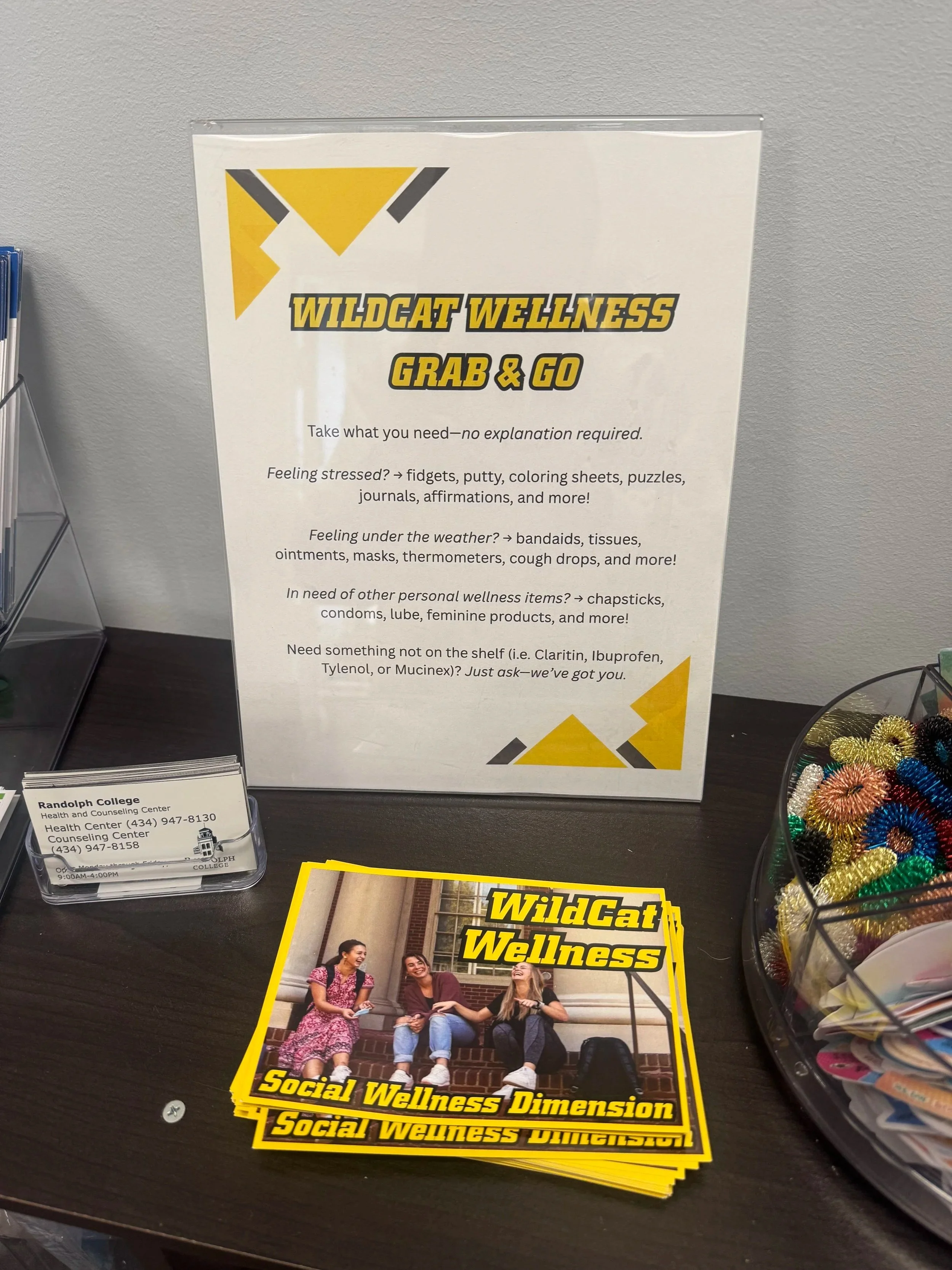
The expansion into Student Engagement adds another important piece to the model: access at any time. Located in an open student space, the resources are available 24 hours a day, seven days a week. There are no office doors to walk through, no business hours to consider, and no one a student has to ask. The resources are simply there when needed.
The concept is intentionally simple: bring useful resources closer to students and make them easy, informal, and stigma-free to access.
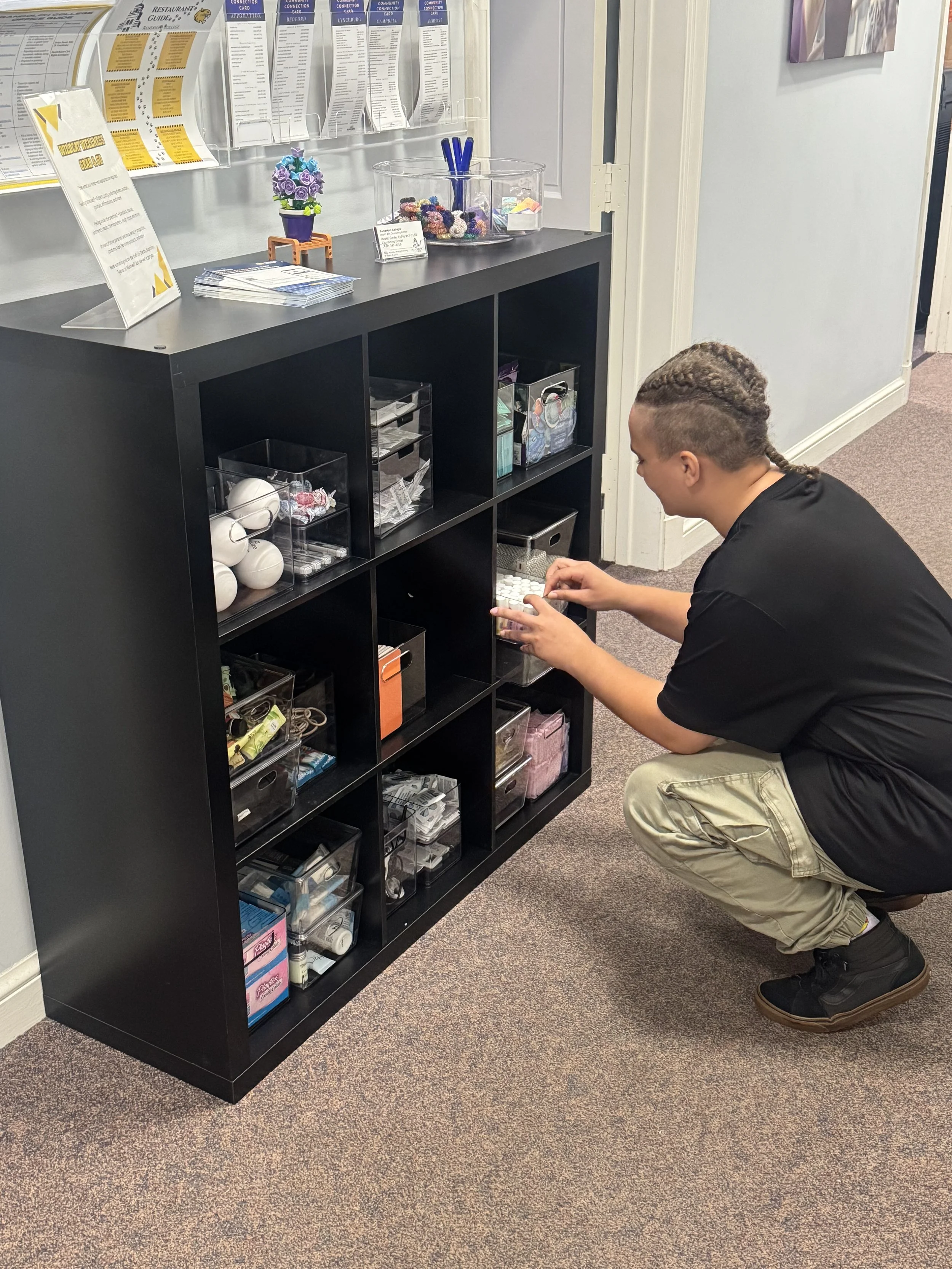
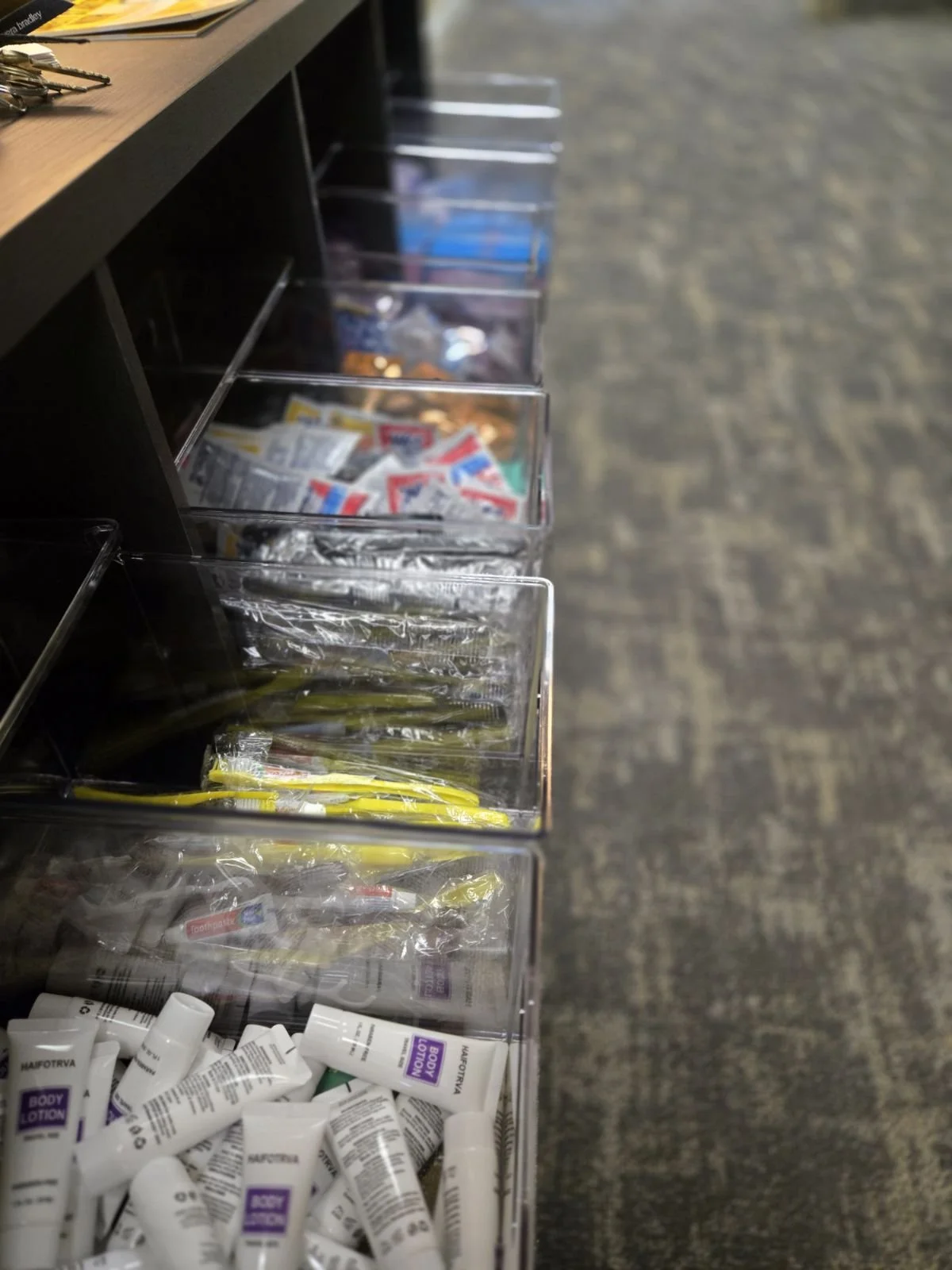
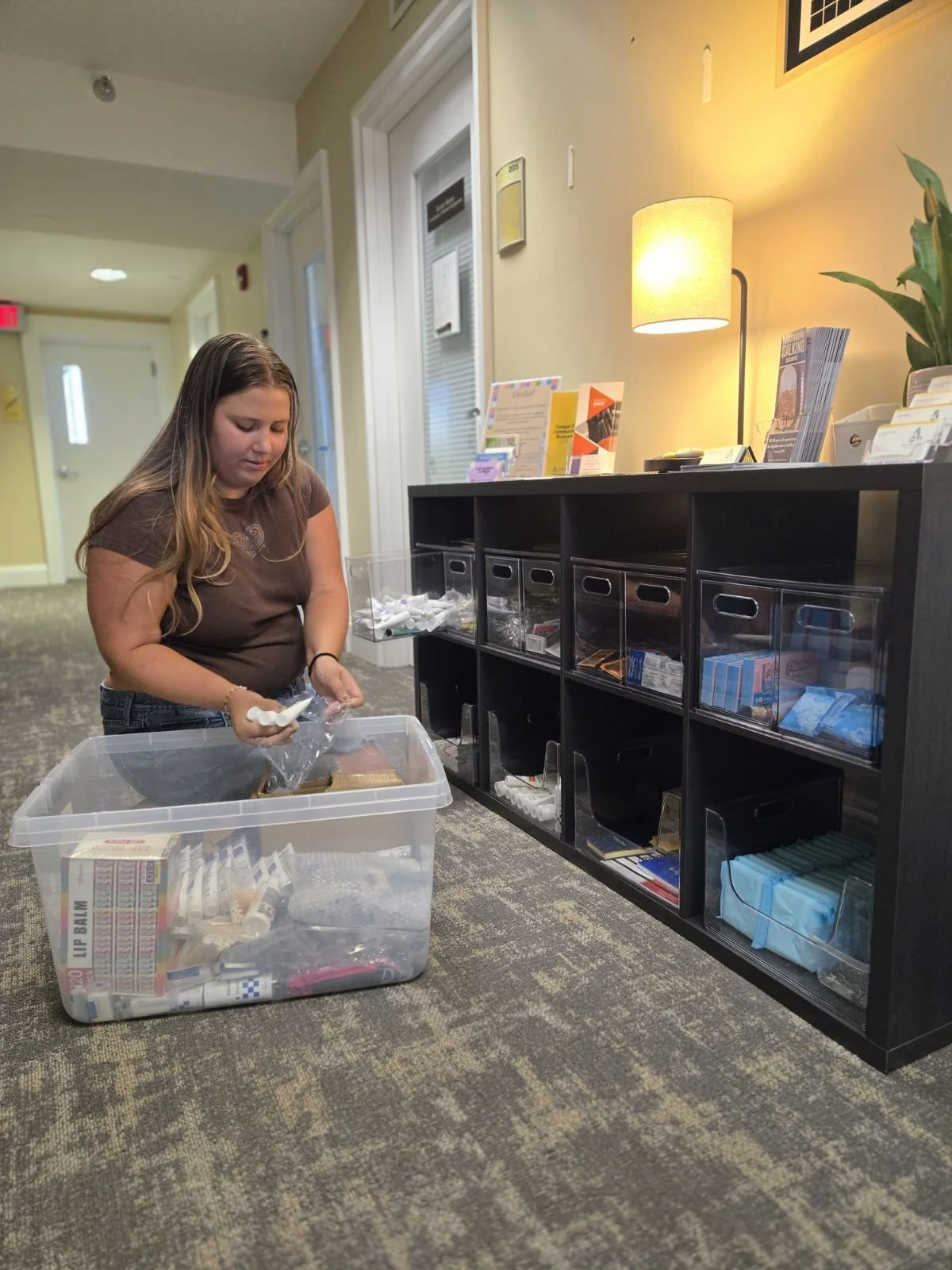
Sometimes what a student needs is also pretty simple. It might be an extra toothbrush and a small tube of toothpaste, a travel-size bottle of lotion to get through until they can make it to the store, a pad or tampon, or a small journal. At students' request, the stations also include both latex and non-latex condoms. Fidgets, sensory items, small school supplies, phone chargers, and other practical wellness items can be included based on the needs of students using each space.
The stations operate on a simple principle: take what you need and leave what you don't. The stations are regularly restocked, so there is no need to stock up for the semester. Students are simply asked to be thoughtful of the next person who may need something too.
But the Resource Stations are about more than the physical items sitting on the shelves. Alongside a toothbrush might be information about how often it should be replaced. Near sexual health supplies, students can find information about healthy relationships, consent, and other resources. A student who stops for toothpaste might also learn about the food pantry or Rummage Room, while someone picking up a journal may notice information about Counseling. The physical item meets an immediate need, but it can also provide an opportunity for education or connection to additional campus support.
Piper DeMartino ’26 has watched the idea develop from both sides. She completed her undergraduate degree at Randolph in 2026 and returned this fall for graduate school. Along the way, she has helped keep the stations stocked, offered suggestions about what students might actually use, and, on at least one occasion, found herself needing the Resource Station too.
“I was here before the Resource Stations, and as they’ve started popping up across campus, I’ve even helped keep them stocked and recommended items I thought students would use. I think they’re great. I know students are using them because we can see it in how often we’re restocking certain items. It may not seem like a lot, but it’s noticeable. When I moved in this year, I realized I had forgotten my toothbrush. I knew exactly where to go and that the Resource Station had me covered. I was thankful it was one less thing I had to worry about while starting leadership training and my first days as a graduate assistant.”
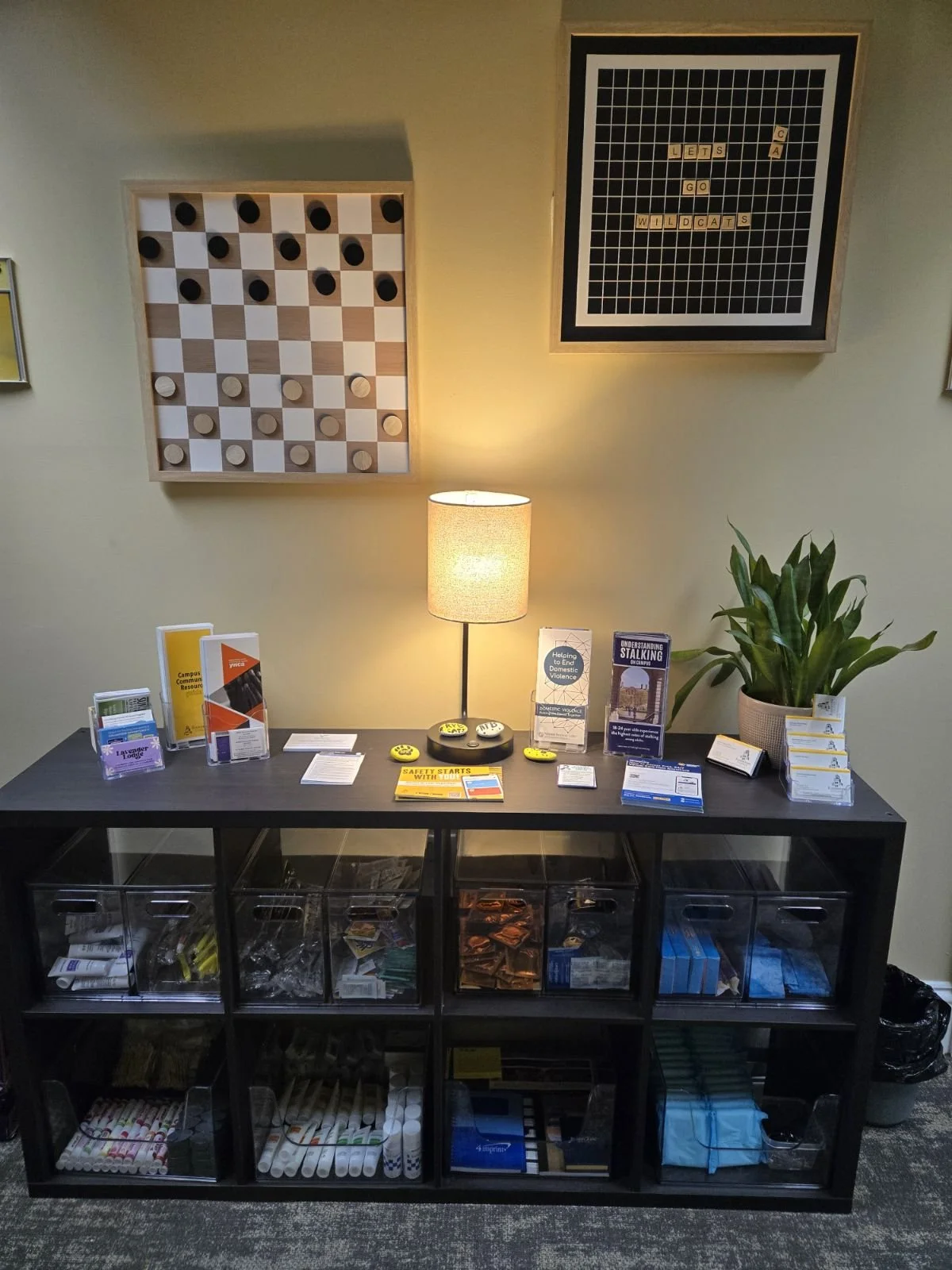
The stations complement, rather than replace, the services and resources already available across campus. They can help students learn more about Counseling, the Health Center, Title IX, basic-needs resources, and other forms of support while also addressing something they may need in that moment.
Each station can also respond to the space it occupies and the students who use it. What makes sense in Student Engagement may look different from what is most useful in Health & Counseling or Title IX. Student requests, use, and feedback can continue to shape what is stocked, what information is provided, and where another station may be helpful. By placing Resource Stations throughout campus, Randolph is bringing support into spaces students already use. Each location creates another opportunity for a student to encounter a resource, information, or connection to support, while the 24/7 Student Engagement station provides access even when College offices are closed.
The model is intentionally practical and adaptable. Creating another point of access to care does not always require developing a new program, adding another appointment, or asking students to navigate another process. Sometimes it can mean using existing spaces differently and bringing resources directly into them.
The expanding Resource Station model is one example of Randolph College’s work within the Endeavor Lab Colleges Community Care & Resilience initiative to explore practical, adaptable ways of strengthening wellness, resilience, and belonging. The approach reflects the working group’s emphasis on embedding community care into existing campus structures and creating accessible tools and resources that can be adapted to the needs and culture of individual campuses.
Sometimes community care is a program or a conversation. Sometimes it is education or a connection to additional support. Sometimes it is simply making sure what a student needs is within reach.
Donna E. Burckhard is the Director of Student Engagement and Support at Randolph College.
Chelsea Piechowski is the Chief Wellness Officer at Randolph College.