Accelerating Campus Culture Change: Why the Design Charrette is the Perfect Tool for Cross-Institutional Co-Creation in Higher Education
“I have to admit, when you first told us about the charrette model, I was a bit skeptical that it would work or that we could produce so many resources in an afternoon.” – Ali Tartaglia, Community Care and Community Resilience Co-Lead
Higher education initiatives often get bogged down in endless meetings, theoretical and philosophical debates, multi-year policy cycles, and timeless discussion of why things cannot possibly happen as we would like. If this is true for each one of our institutions, imagine the challenges facing a cross-institutional collaboration of small, geographically diverse institutions, with different missions, campus cultures, academic programs, and varying academic calendars. The charrette model alongside the commitment of our faculty, staff and students “fueled” not “foiled” the production of four major toolkits, with 13 resource modules in 1.5 days.
At the Endeavor Lab Colleges (ELC) Presidential Fellows Gathering, we utilized an alternative model to co-creating shared academic resources: the Design Charrette. Emerging from structural design work, the charrette process of co-creation has been used in a variety of industrial and community settings but is less common in the design of curriculum or resources in higher education. In just one and a half days, 18 Endeavor Faculty and Staff Fellows, along with six Student Fellows, moved from ideation to the co-creation of 13 interchangeable and adaptable resources for campuses’ integrating well-being, on-boarding, and curriculum design. This Praxis post explores why the charrette format works, how to facilitate one on your campus, and what we produced together in an afternoon.
Why Does the Design Charrette Work Well in Higher Education?
A charrette format:
Emphasizes brainstorming and idea collection over evaluation—In so doing, it allows many voices, perspectives, and models to be heard before any attention shifts to sifting, sorting, or evaluating the quality or feasibility of the ideas or information shared. This allows space for conversation without attention to barriers.
Collapses time through “low fidelity action”—In traditional academic culture there is an emphasis on finding the “right” idea, philosophical arguments, or perfectionism that often results in paralysis of action. The design charrette introduces a bias toward low fidelity action—prioritizing quick, imperfect execution over slower more refined execution. Encouraging the rough outline on a page in the course of a 20-minute discussion is far more useful than a polished idea formed in someone’s head over days.
Provides for equal seats at the table (collapsing silos)—Real institutional care and whole-person education requires bridging the historical divides between Academic Affairs and Student Life. By structuring our design teams in a 1:1 mix of faculty and staff, the charrette served to create equal parity among the participants and allowed for appreciating differences in expertise. Our structure recognized that faculty bring strong pedagogical framing, while staff bring deep operational expertise and rich understanding of community care and resilience building.
Encourages rapid iteration over selection—Unlike traditional design sprints which focus on the selection of the “winning” design and throws away the rest, our modular component sprints focused on the creation of numerous interchangeable resources and retained every prototype. We appreciated that a faculty directed Community Resilience Model (CRM) training resource developed by the “red team” could be tagged and adapted for a new faculty on-boarding toolkit or a new student orientation packet, maximizing institutional return on the time invested.
ELC’s Step-By-Step Charrette Playbook
Common Grounding & Democratized Selection:
Pre-readings and a review of the materials previously generated by the Curriculum and Community Care & Community Resilience Working Groups assured participants arrived with shared knowledge of the 9-Dimensions of Well-Being, Community Resilience Model, and the pedagogical framing of whole-person education developed by the Curriculum Working Group last spring.
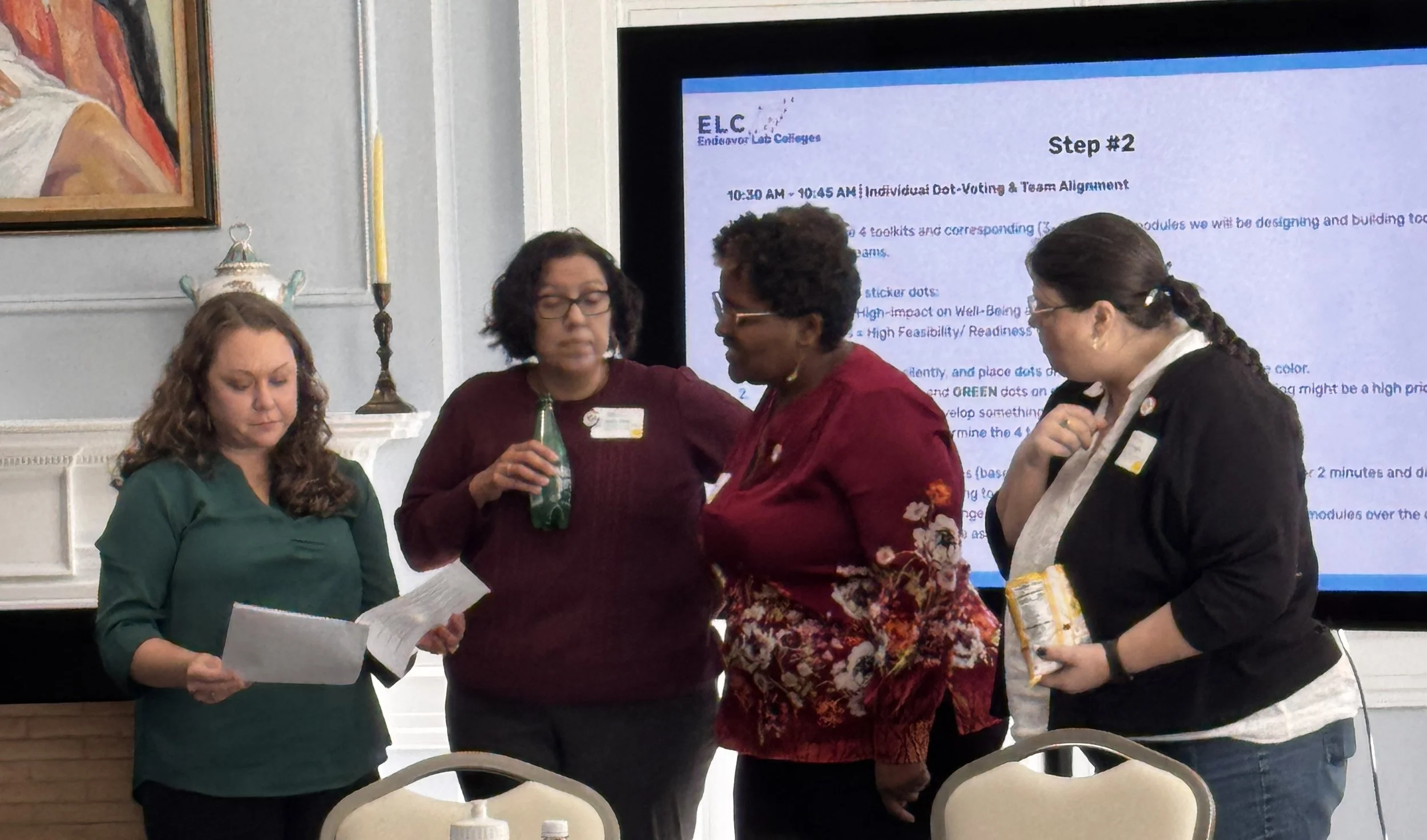
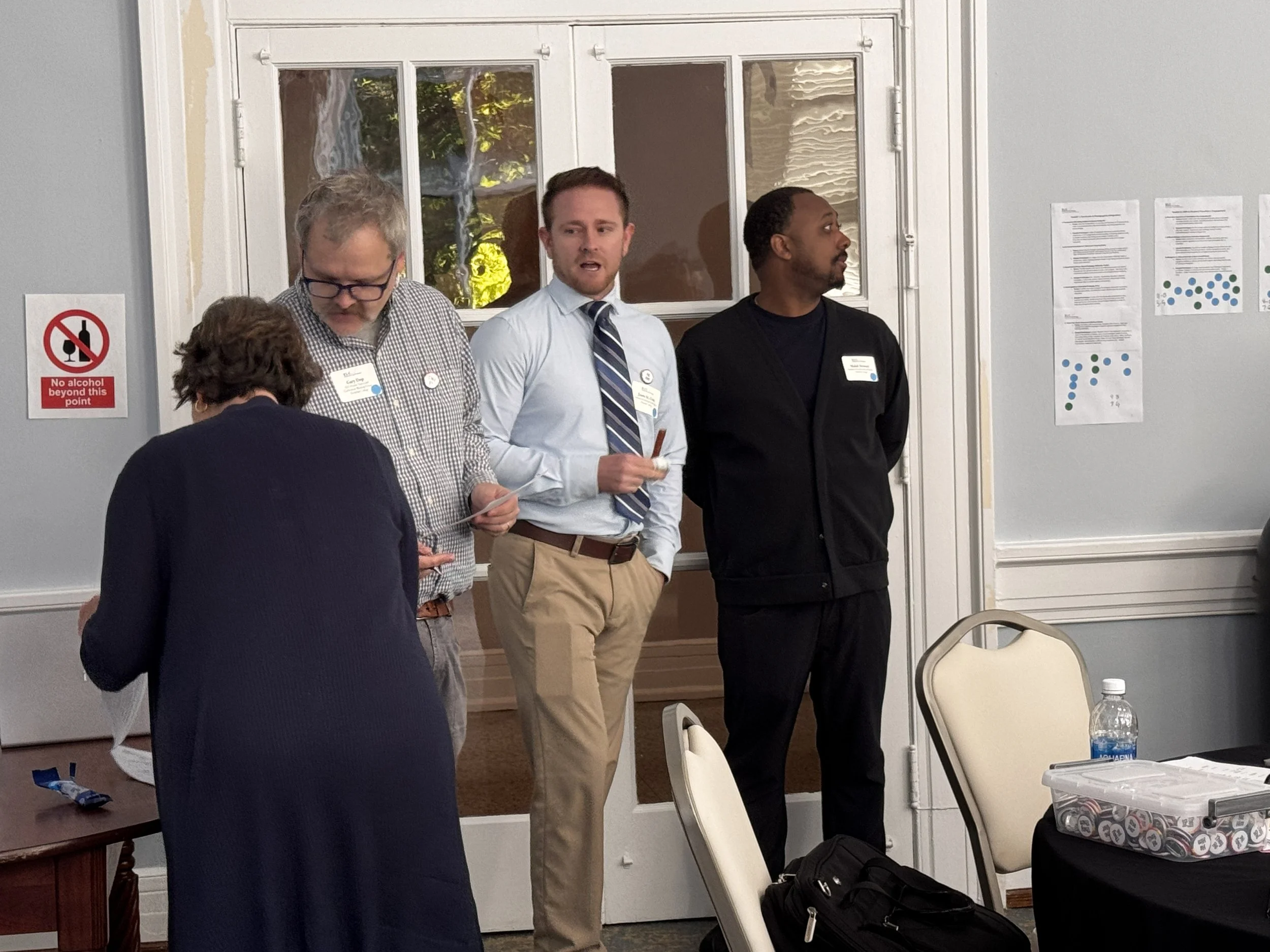
Based on our previous working group notes we provided an outline of potential toolkits and resources that had been discussed for development, but never moved to that stage through the more traditional committee working group model. After shared discussion of those that might be most impactful across our institutions, the importance of prioritizing their development to facilitate that impact, and the feasibility of constructing them on that day—with the resources and expertise in the room—individuals voted for specific toolkits using colored dots, (e.g., Blue - High Priority/High Impact; Green - High Feasibility). This immediately established consensus on what we would be co-designing in our teams.
Rapid Co-Creation and Peer Feedback:
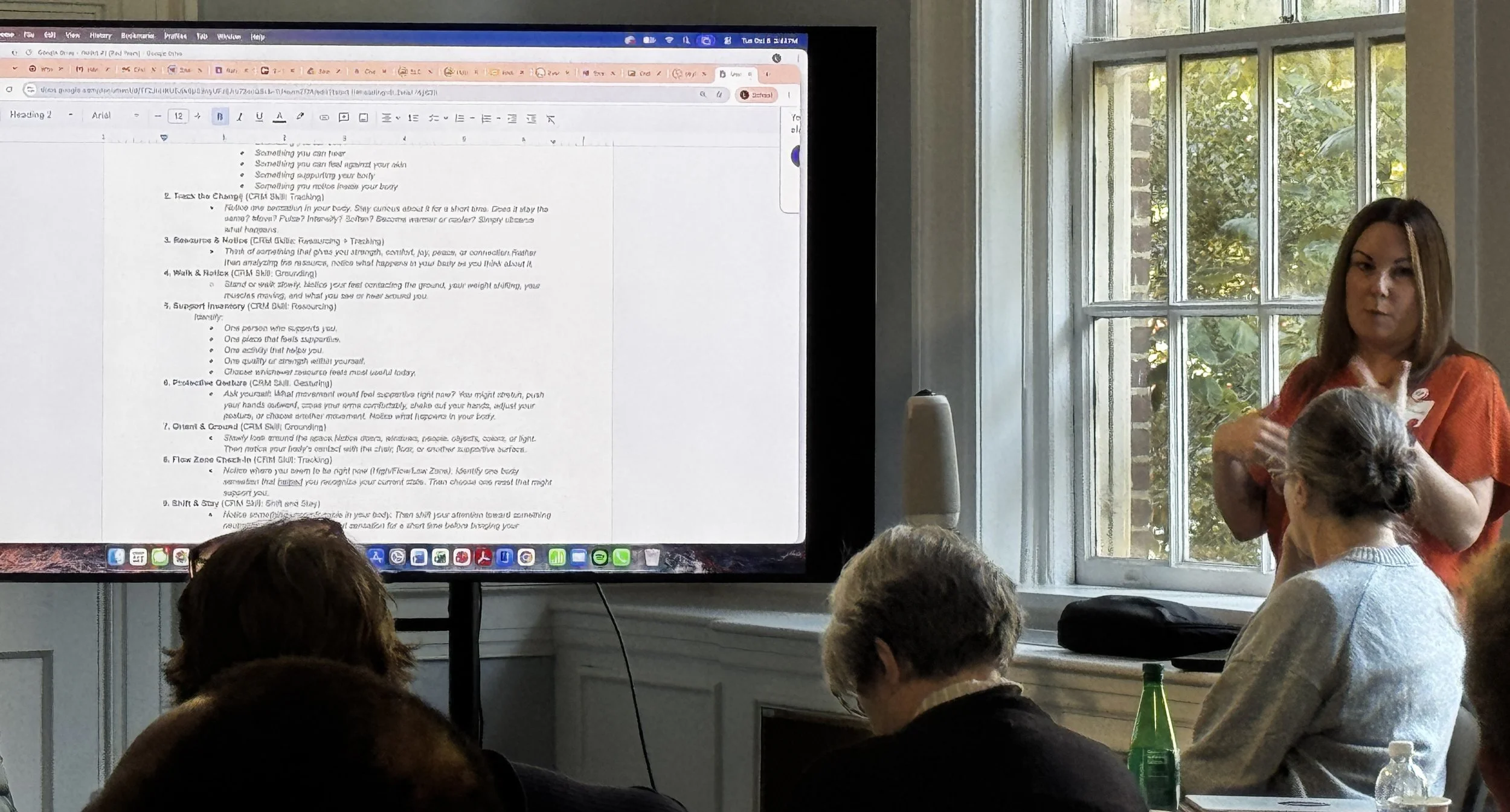
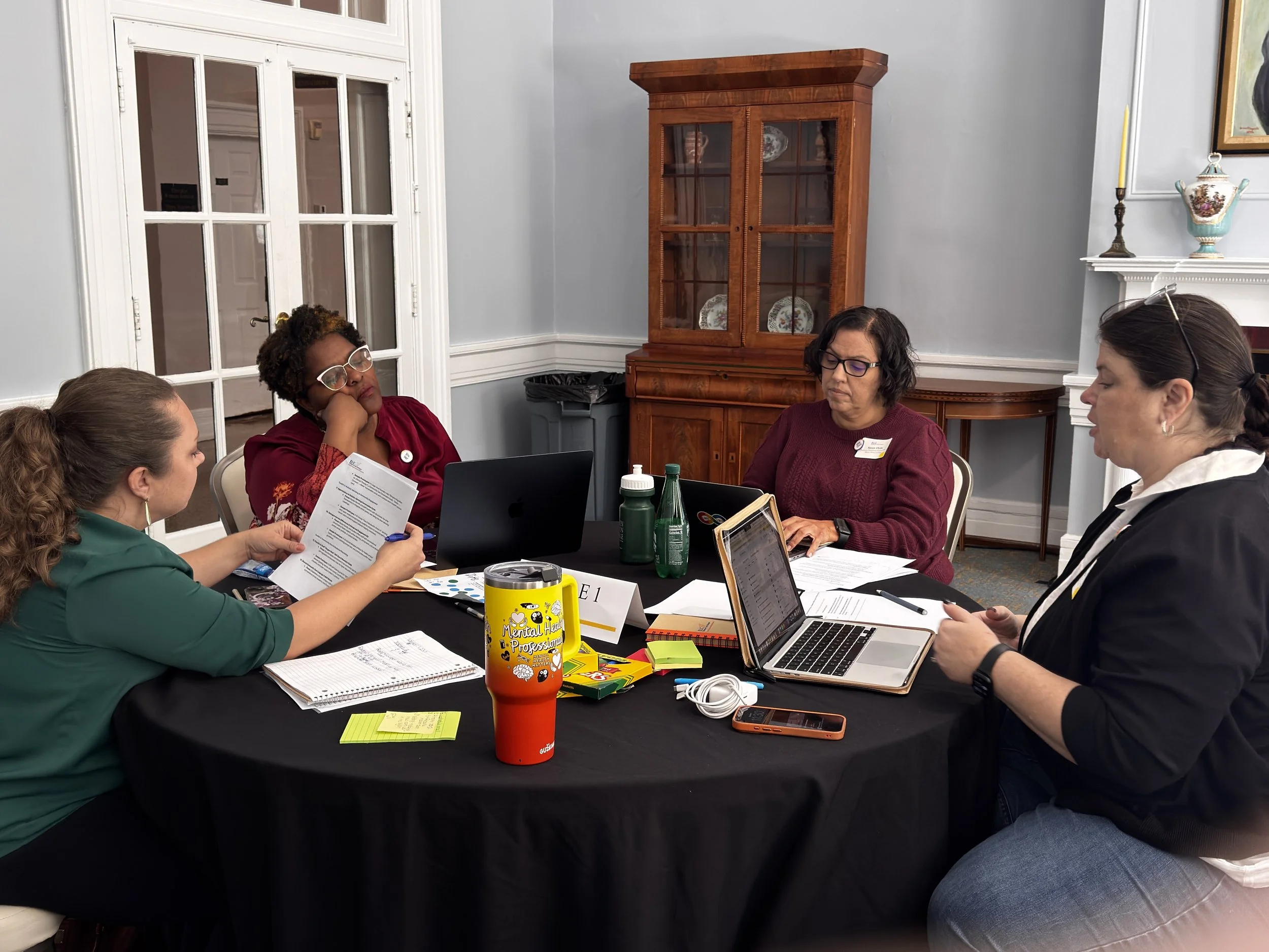
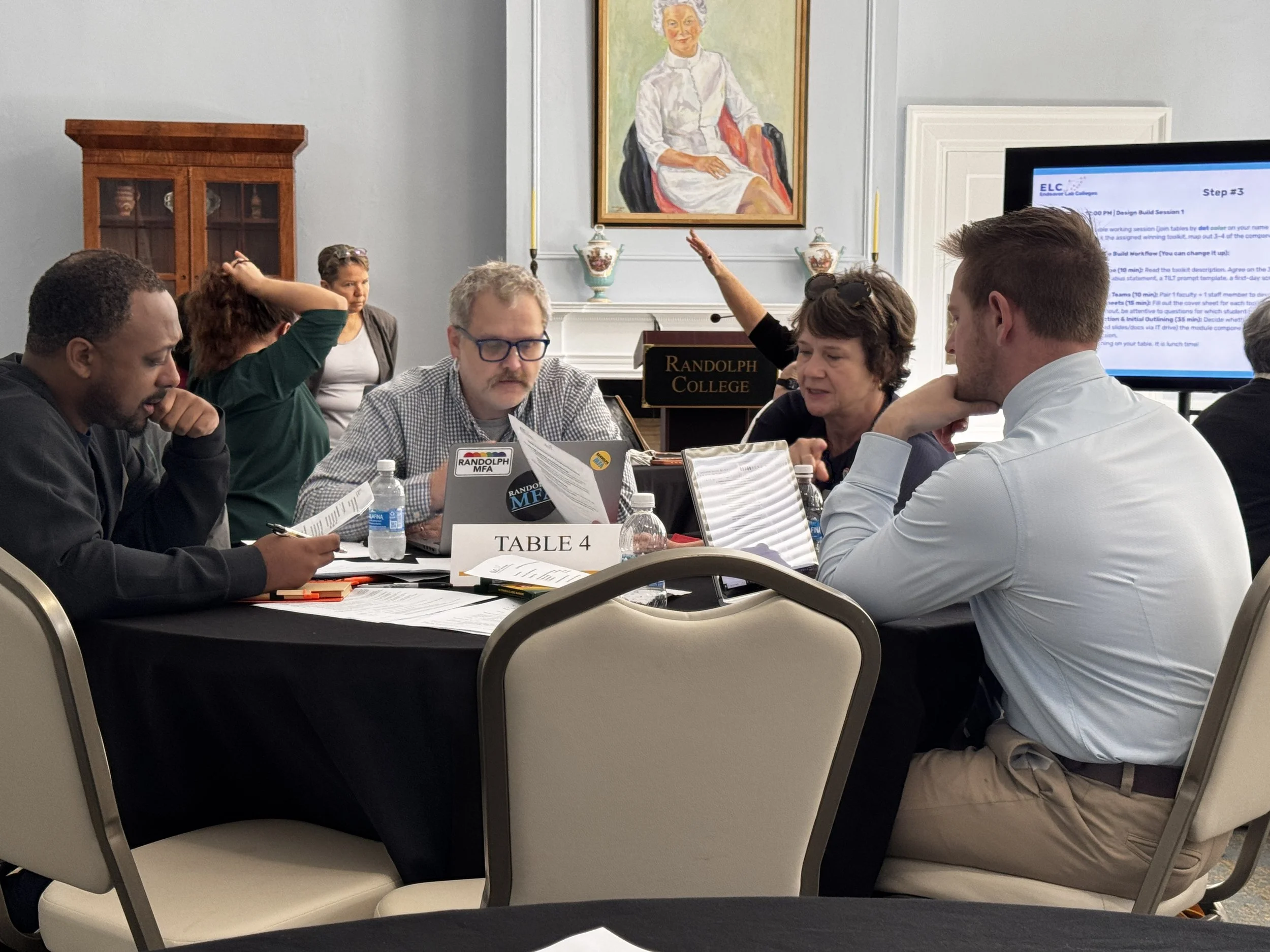
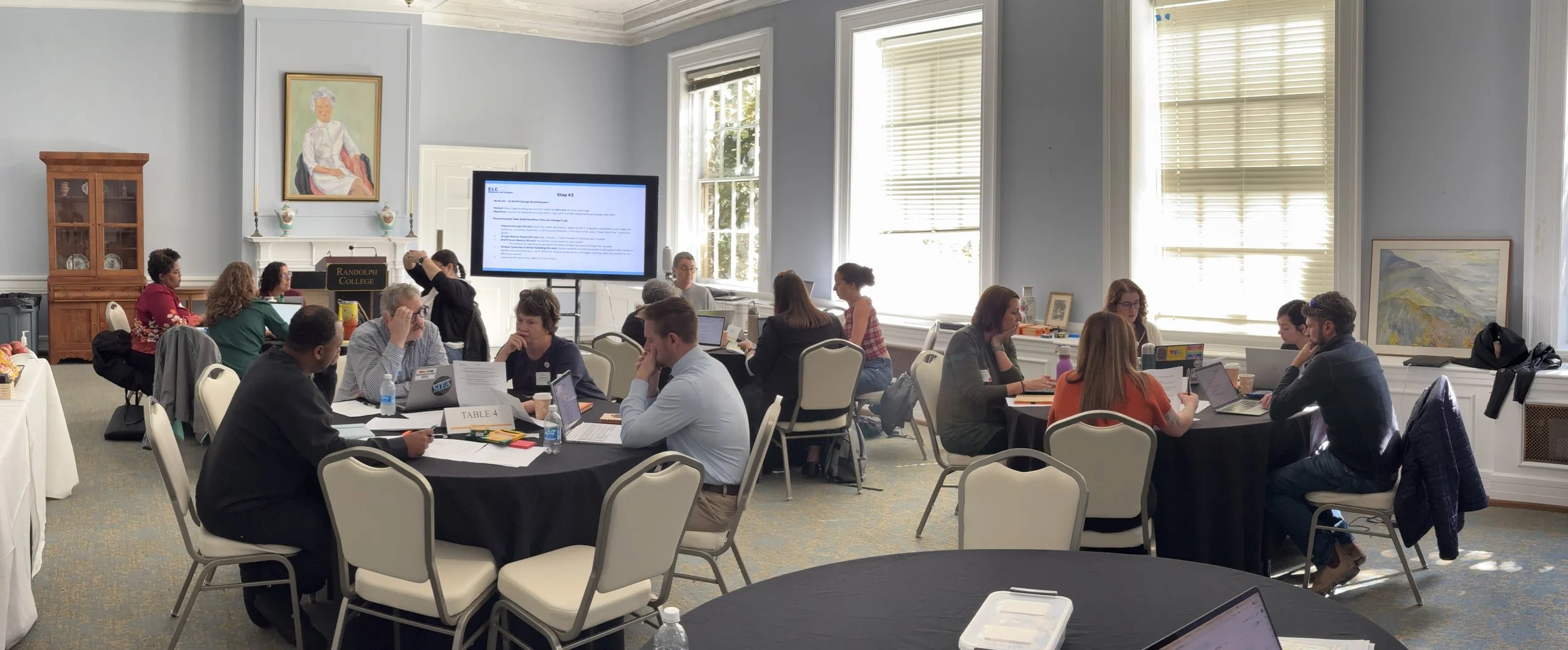
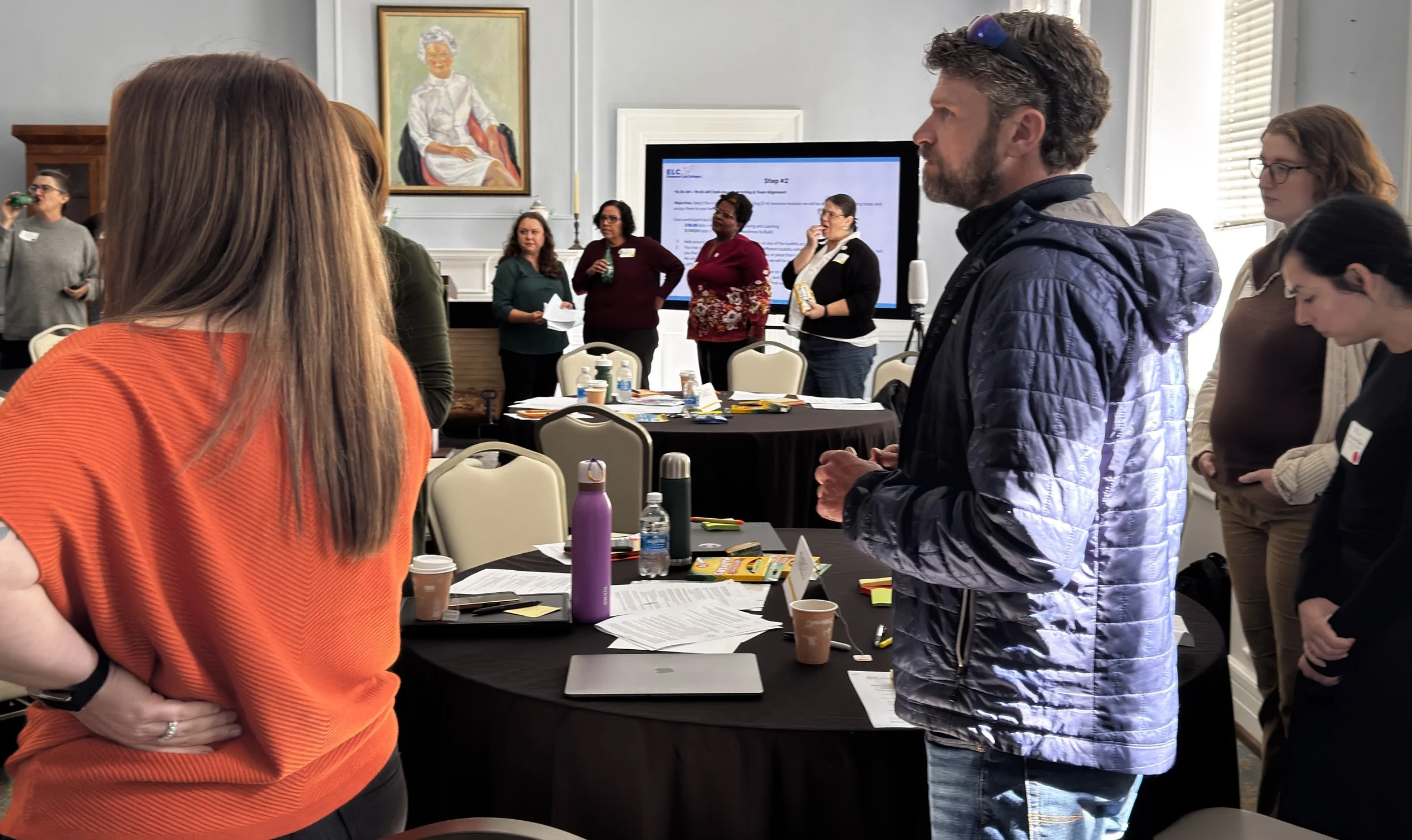
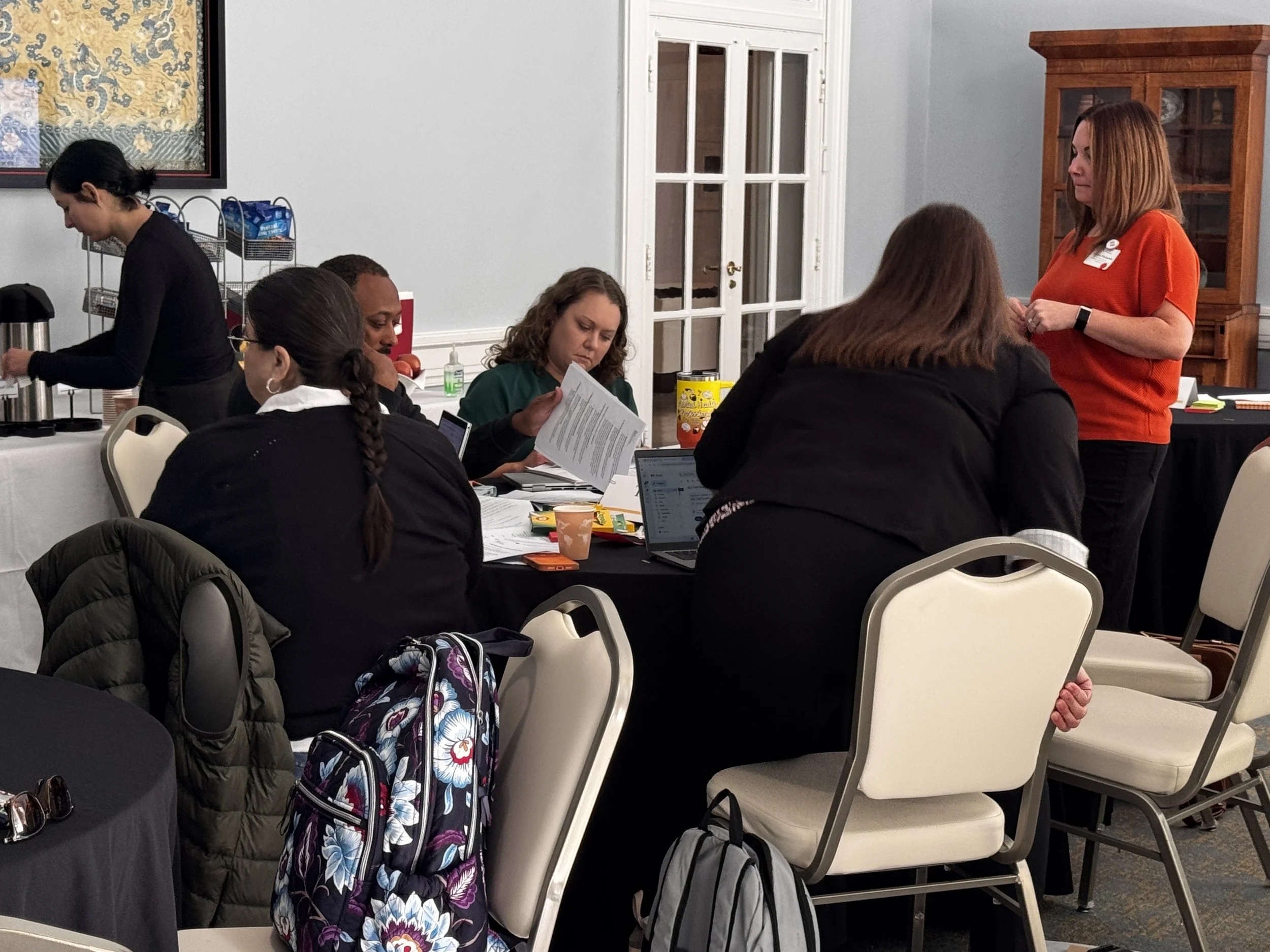
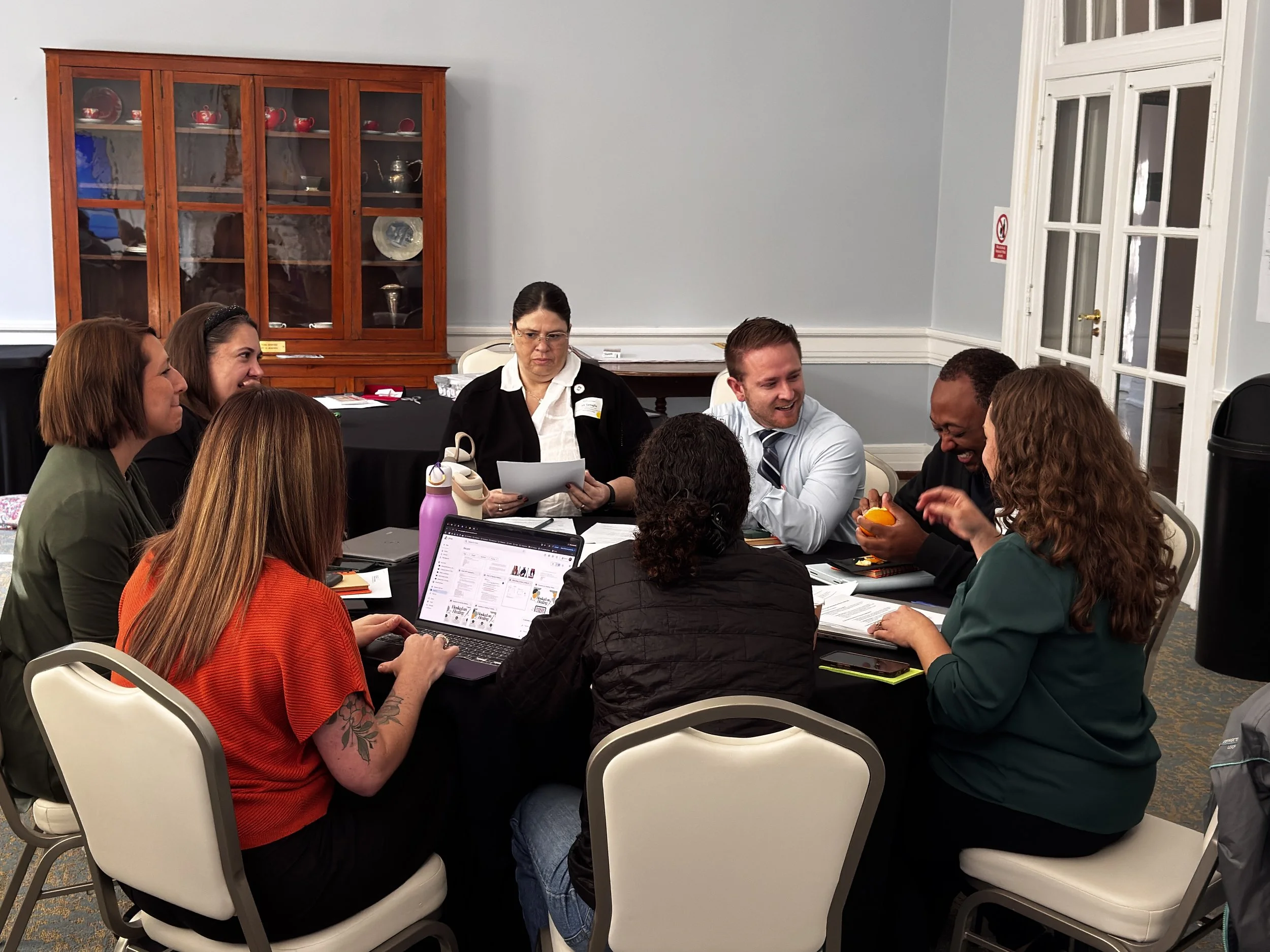
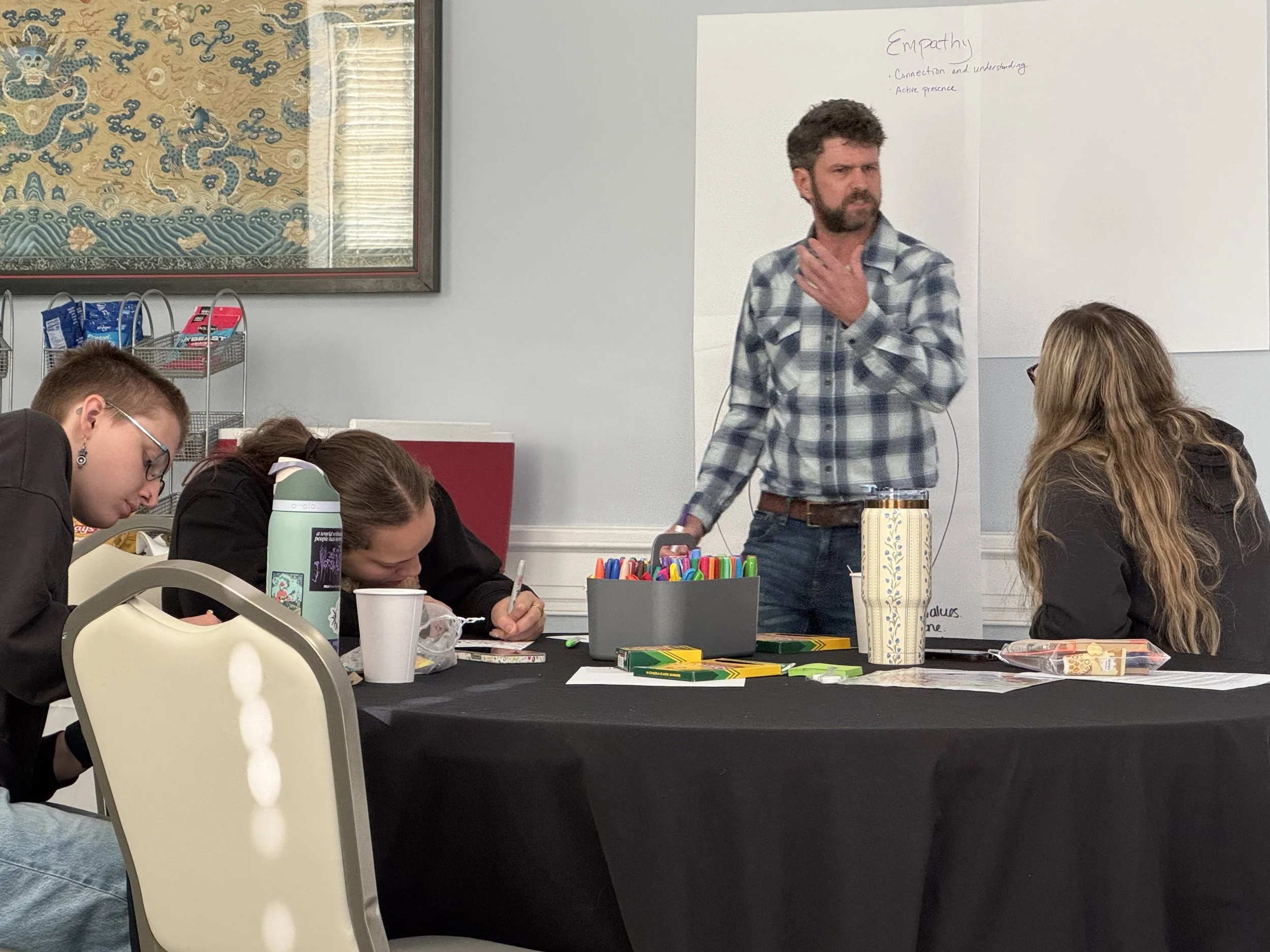
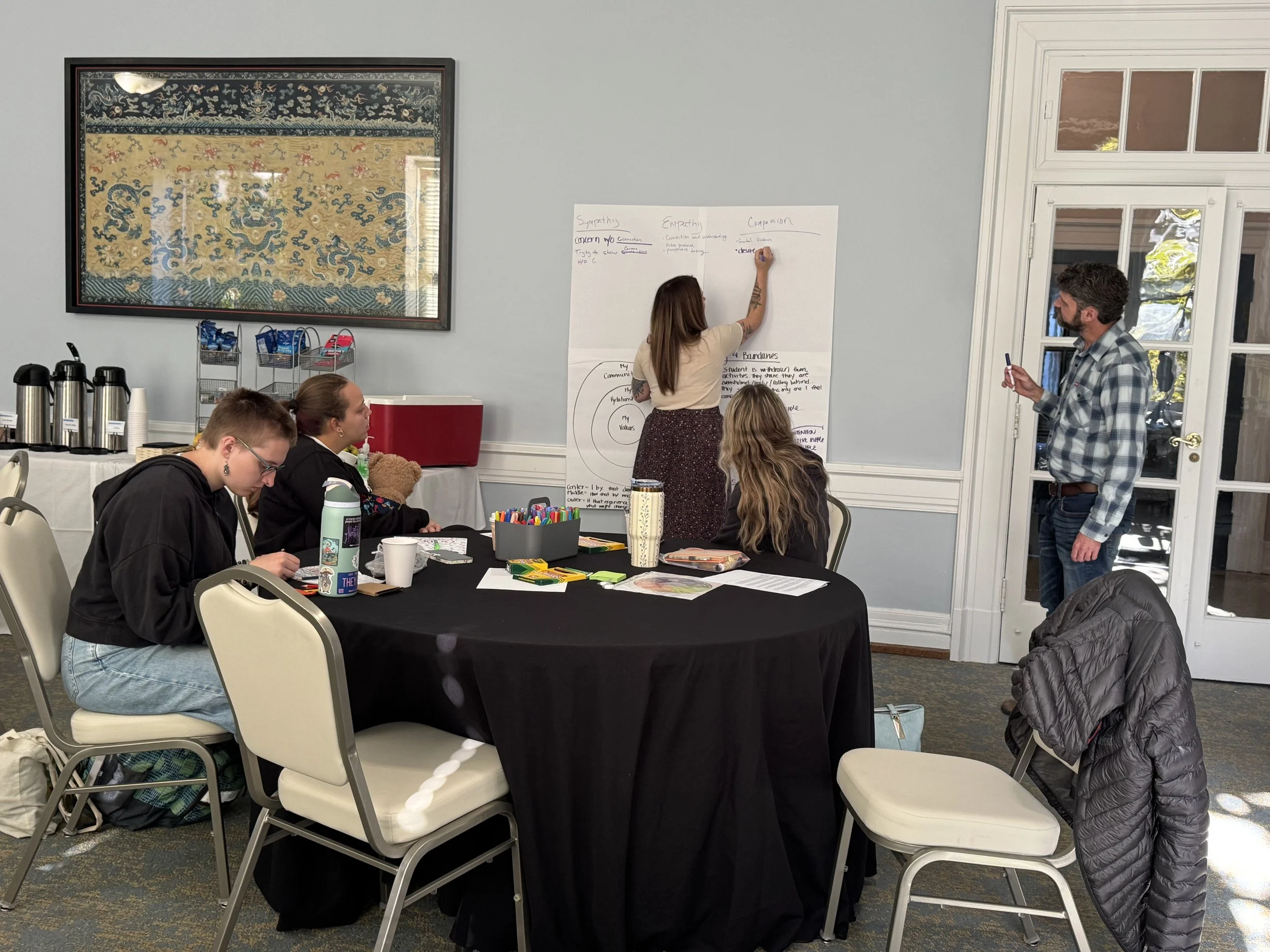
Participants were assigned to tables of four (two Faculty Fellows and two Staff Fellows) to co-create resource modules identified in each toolkit.
Participants quickly determined the resource to be created and the workflow for creating them, and the work began.
Once resources were created, table review and feedback was encouraged.
Capturing Resources in a Shared Digital Drive:
We established a shared Google Drive for all participants to upload materials created in their teams.
All digital materials were uploaded by teams to that drive.
All handwritten documents, on newsprint around the room or on paper at the tables, were photographed and captured in that drive, by team.
Each team documented key information, including the resources connected to the toolkit, the audience for the toolkit, and each resource contained in the toolkit on a Toolkit Cover Sheet.
Toolkit & Resource Curation with Whole Group Feedback:
Materials we displayed in digital presentation format or newsprint on the walls.
Rather than critiquing or debating which prototypes were best, feedback focused on what people liked about a particular resource, information or design, what they felt might be missing, and what they suggested for strengthening the resource.
Resources were also tagged for cross toolkit utilization.
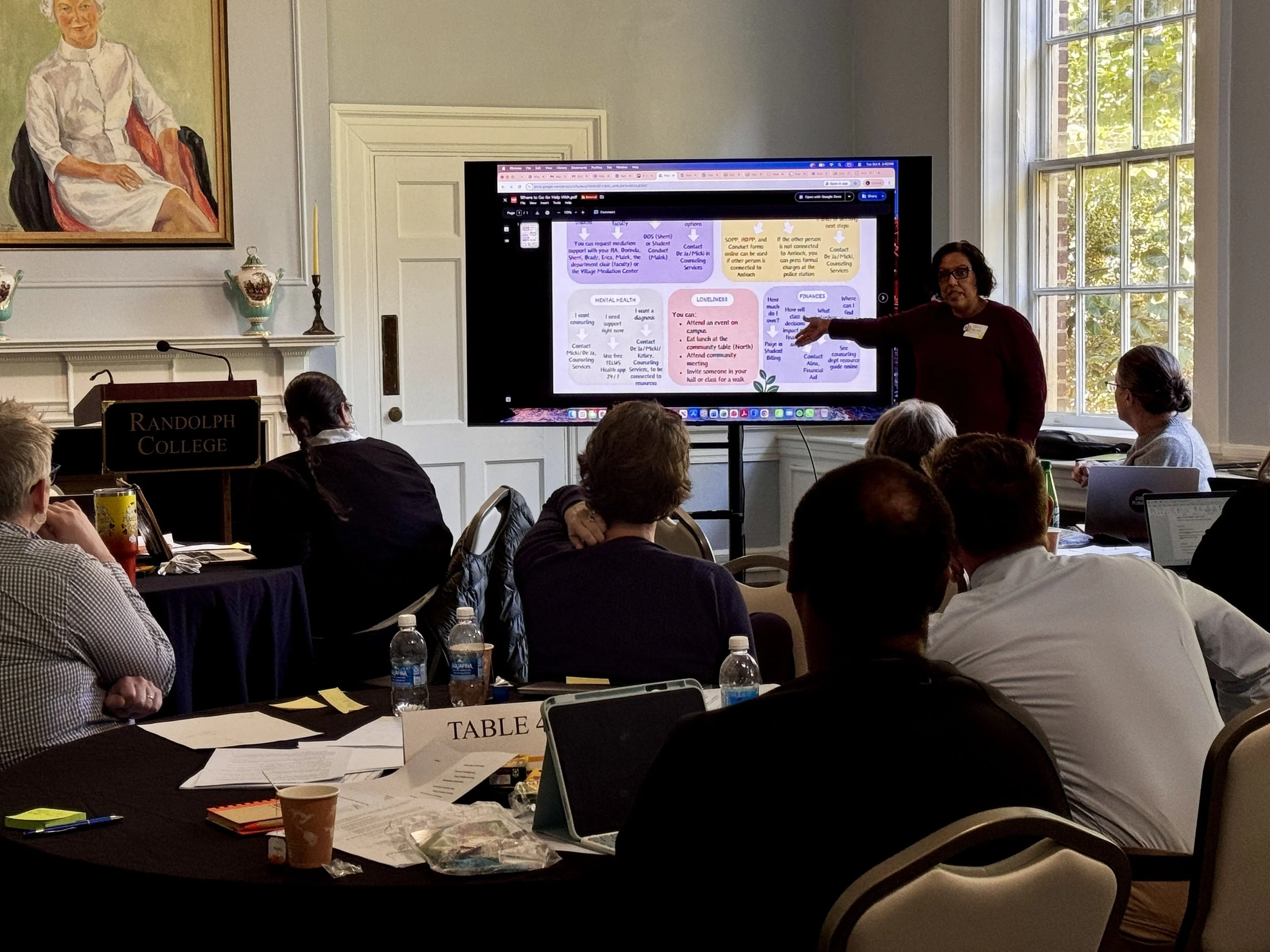
Resources and toolkits we presented to the whole group to allow them to be informed by a broader array of institutional, disciplinary, and role perspectives.
At the completion of the feedback session, notes were added to the teams’ section of the Drive, and next steps were added to the Toolkit Cover Sheet.
Student Validation and Feedback:
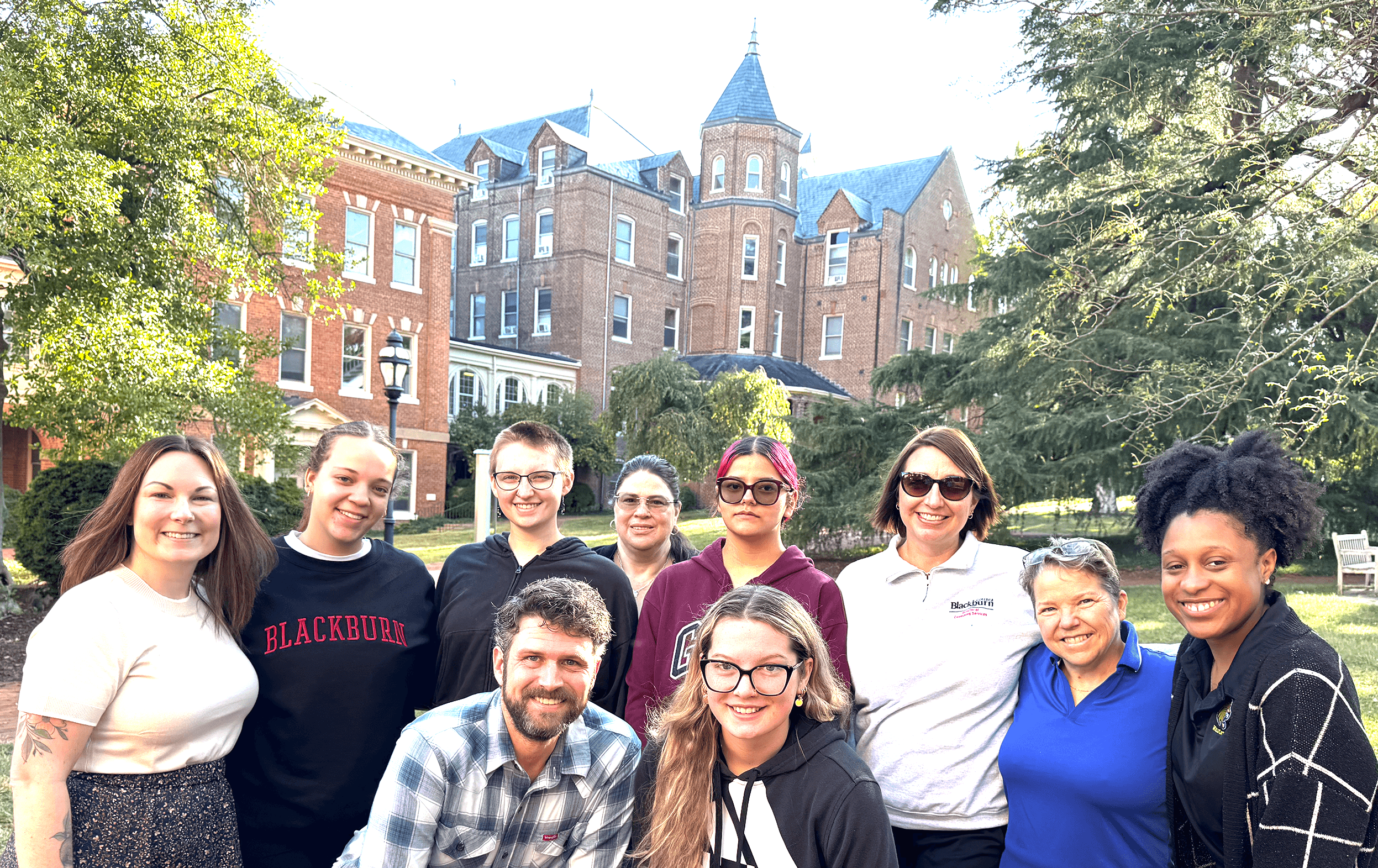
On Day 2, Endeavor Presidential Student Fellows joined the conversation to allow our resource and toolkit development to be informed and refined through student voices.
Three specific student-facing toolkits or resources were selected to be presented to and solicit feedback from Student Endeavor Fellows. As materials were presented, notes were taken of the discussion, and shared with each team to allow for further refinement of the materials based on student feedback.
We used a “Listen, Note, Thank” format—allowing Faculty and Staff Fellows to fully absorb students' feedback without explaining their rationales for decision-making.
Faculty and Staff Fellows reported they experienced the student feedback as invaluable, including recognition of the difference and importance of “faculty speak” versus “student speak” in getting students to participate in ways faculty and staff were hoping for in the development of their resources and toolkits.
Deliverables Produced During the ELC Charrette
Across 195 minutes (= 3.3 hours) of active engagement, our four teams developed 13 distinct, interchangeable, modular resource prototypes for further refinement as parts of four master toolkits, supporting:
Curricular and Pedagogical Integration, featuring a faculty guide to the 9- Dimensions of Well-Being, a guided reflection resource for experiential and place-based education, and a “Know Your Zone” Classroom Community Resilience (CRM) Resource Guide.
On-Boarding and Institutional Policy to Support Whole-Person Education and Well-Being, including a template and process for the development of a “Student Reality Guide: What Your Students Want You to Know About Them”, a “Faculty Duty of Care” guidelines highlighting the differences and overlaps of faculty responsibility in the classroom and the referrals and roles of clinical staff to assist faculty in better understanding their role in student supporting well-being, and a customizable template for a Community Care Pocket Guide.
Holistic Advising and Community Engagement, including customizable Appreciative and Holistic Advising Conversation Cards, a wellness check-in and reflection tools to support advising conversations, and a student resource to support understanding their role in the advising process and how to effectively self-advocate in educational settings.
Community Resilience Model (CRM) and Student Transition, featuring customizable resources for embedding CRM and concepts of community care in Orientation & First Year Experience (FYE), resources clarifying the boundary between non-clinical Community Resilience Model (CRM) support and clinical support, including a Warm Handoff Guide to support faculty/staff in making referrals to the counseling center, and Dialogues Across Difference Intragroup Engagement Resources to support faculty in navigating difficult classroom conversations.
Important Insights for Higher Education Leaders Who Want to Use the Charrette Model
Be Attentive to and Carefully Facilitate Peoples’ Energy: Be sure to build in regular breaks and opportunities to reset. This style of fast-paced decision-making and building places a high energy demand in participants and increases the potential for decision fatigue. Be sure you have opportunities for people to change the ways they are engaging, settings, and spaces for the work (e.g., table work, brainstorming on newsprint, presentations, and individual, small, and large group sessions) for quick resets encouraged by context switching. This allows more work with less mounting fatigue.
Flexibility is Critical: The facilitator enters this work with a plan; however, they do not know the pace of production or the exact energy demands of the work. It is important to be willing to “read the room” and change up the facilitation plan to get people up and moving when energy lags, add an unexpected break to give a pause and step away, or to slow or speed-up facilitation if things are coming together faster or slower than expected.
Capture Information as You Go: It is important to have a capture system (newsprint, drawings, concept maps, digital documents, digital storage) established before you begin. When building your facilitation plan, build opportunities for capturing key moments in the work.
Build in the Handoff: Charrettes do not replace the work of groups or committees, they only supercharge them. The charrette delivers low-fidelity raw materials and prototypes that need further feedback, refinement, context specific development, and buy-in. Use your time in the Charrette Closing & Debrief to outline and agree on next steps for the further development and refinement of materials.
CELEBRATE 🎉 All too often in higher education, especially at small and leanly staffed institutions, we just move on to the next thing on our “to-do” lists without recognizing all we have accomplished in a meeting, day, or process. Before stepping back into the “regular” work outside the Charrette, be sure everyone recognizes and appreciates all the ideas and work that has emerged as a result of the Charrette and how long it would have taken, outside the 198 minutes to develop those same materials.
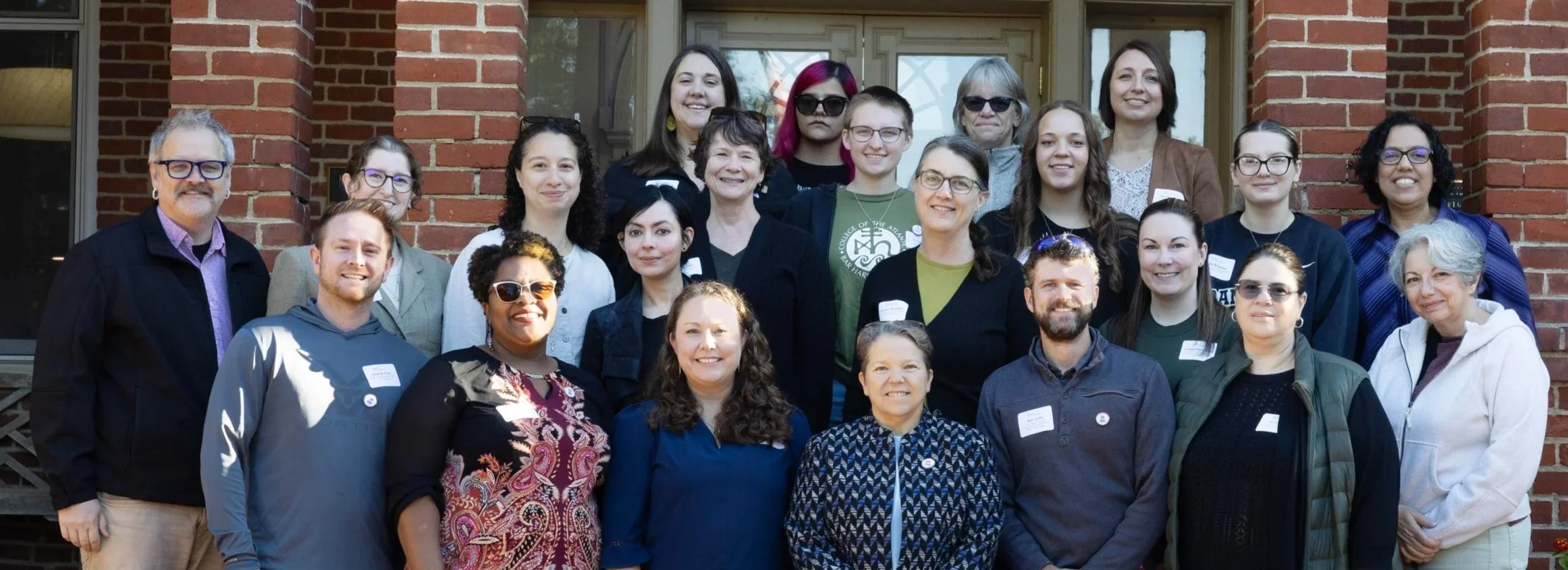
Dr. Lori Collins-Hall is the Project Director of Endeavor Lab Colleges.