
Twenty years ago, when I started a Positive Psychology course at Loras College, the field was new enough that most of my students had never heard the word flourishing used as a psychological concept. They knew plenty about depression, anxiety, and stress. They had not heard much about what it means to do well, to find meaning and purpose, and how a college education could help them develop holistic, thriving lives.
Two decades later, I am still teaching positive psychology, although at a different place, Blackburn, and now at a different scale—flourishing has become a legitimate institutional learning objective. Where in the past college was seen as a path to a good career and a good life, today’s students are aware that a good career and a good life are harder to come by than they used to be, and they are arriving at college with less of the foundation that earlier generations could take for granted.
What does it mean for a college student to flourish, and how would we know? What flourishing looked like for a college student in 2005 is not what it looks like in 2026. The students have changed. The pressures have changed. The national picture is sobering—students are arriving at college carrying more than the institutions they enter were built to hold. The clinical models we have built to respond—counseling centers, crisis services, referrals—are doing real and necessary work, but they are not, by themselves, producing flourishing.
The Endeavor Lab Colleges white paper Framing Well-Being and Whole-Person Education in the Liberal Arts names this shift directly: the liberal arts are, at their core, a well-being intervention, and the time has come for our institutions to claim that identity intentionally. The Healthy Minds Study makes the case empirically. Clinical indicators on college campuses have been improving—depression, anxiety, and suicidal ideation are all trending down, and more students are receiving treatment than ever before. But flourishing has not gotten better. In 2012, 57% of college students met the threshold for flourishing; by 2025, that number was 36.5%. Flourishing is not recovering. As the ELC discusses in “Framing Well-Being and Whole Person Education in the Liberal Arts”, something else has to happen inside the curriculum itself.
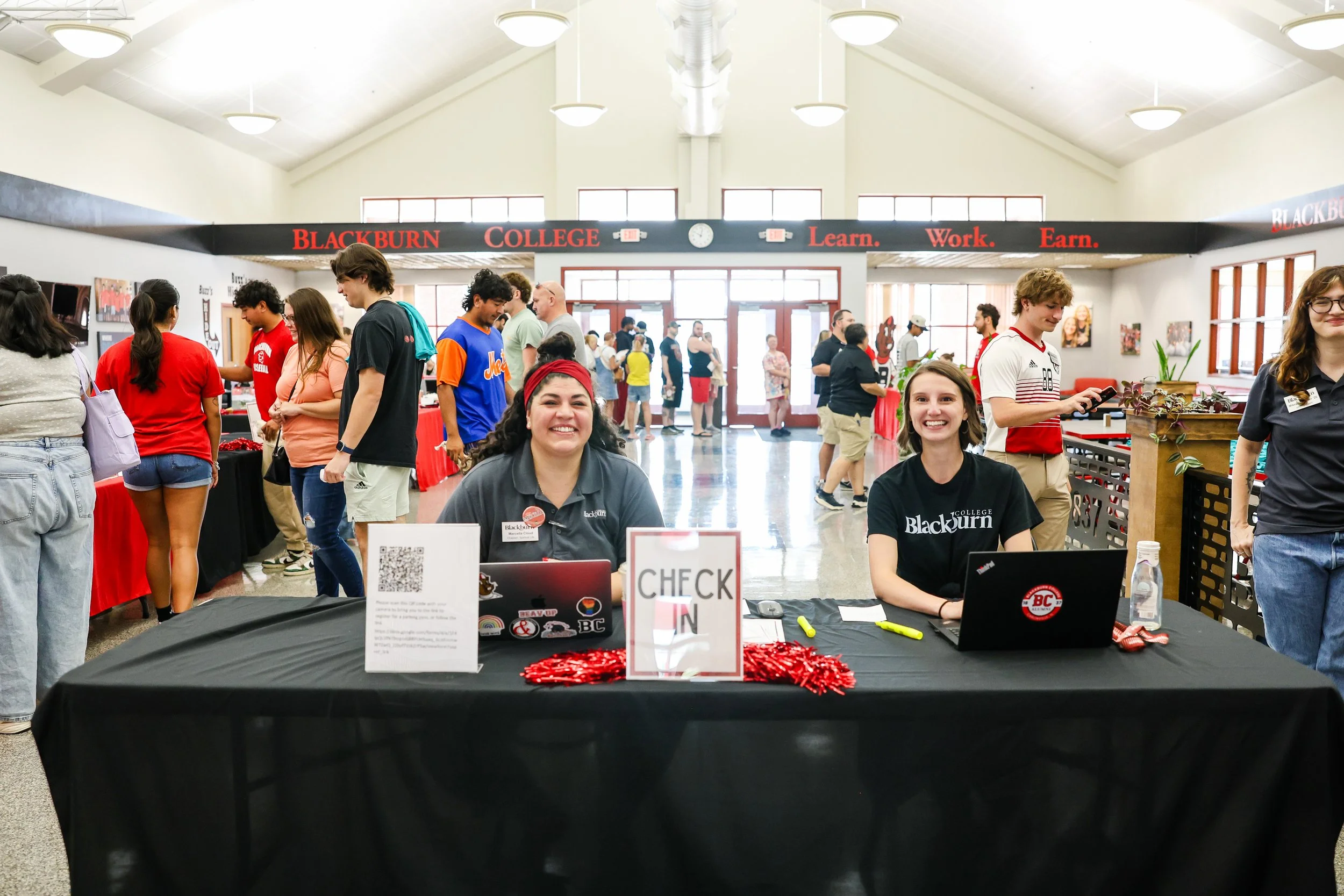
Move In Day 2025.
Last semester, Laura Wiedlocher, Provost at Blackburn, asked me to lead a project to build a new First-Year Experience (FYE) course for all our incoming students. I said yes for reasons that had been building for those twenty years. Blackburn is a small, federally recognized work college in southern Illinois, navigating the kind of period many small liberal arts colleges know well—one of those moments when an institution has to decide what it most wants to protect about itself. The new FYE course we are designing is not a traditional “transition to college” course. It is an intentional design to help students flourish at Blackburn—and the central concept doing that work is belonging. When students feel that they belong, they engage. When they engage, they connect their academic experience, their Work College experience, and their personal lives to a sense that they are becoming someone, somewhere, with people who matter to them.
This intentional design would have been much harder to develop alone. My participation in the Endeavor Lab Colleges Curriculum Working Group has been, without exaggeration, the single largest source of conceptual and practical scaffolding for the work. Monthly meetings with colleagues across the consortium let me think alongside people wrestling with similar questions from very different institutional vantage points. Bennington’s First-Year Forum, where the faculty section leader also serves as the cohort’s academic advisor and a student co-leader helps design and facilitate the class, gave me a model for integrating advising into the first-year course rather than treating it as a parallel structure. St. John’s Compass Year offered a different angle—using structured peer reflection to turn the questions students ask outward back inward, toward purpose and self-knowledge. Conversations with colleagues at Antioch and Warren Wilson, both work colleges like Blackburn, helped me think about how work-program identity belongs at the center of a first-year course rather than running on a parallel track.
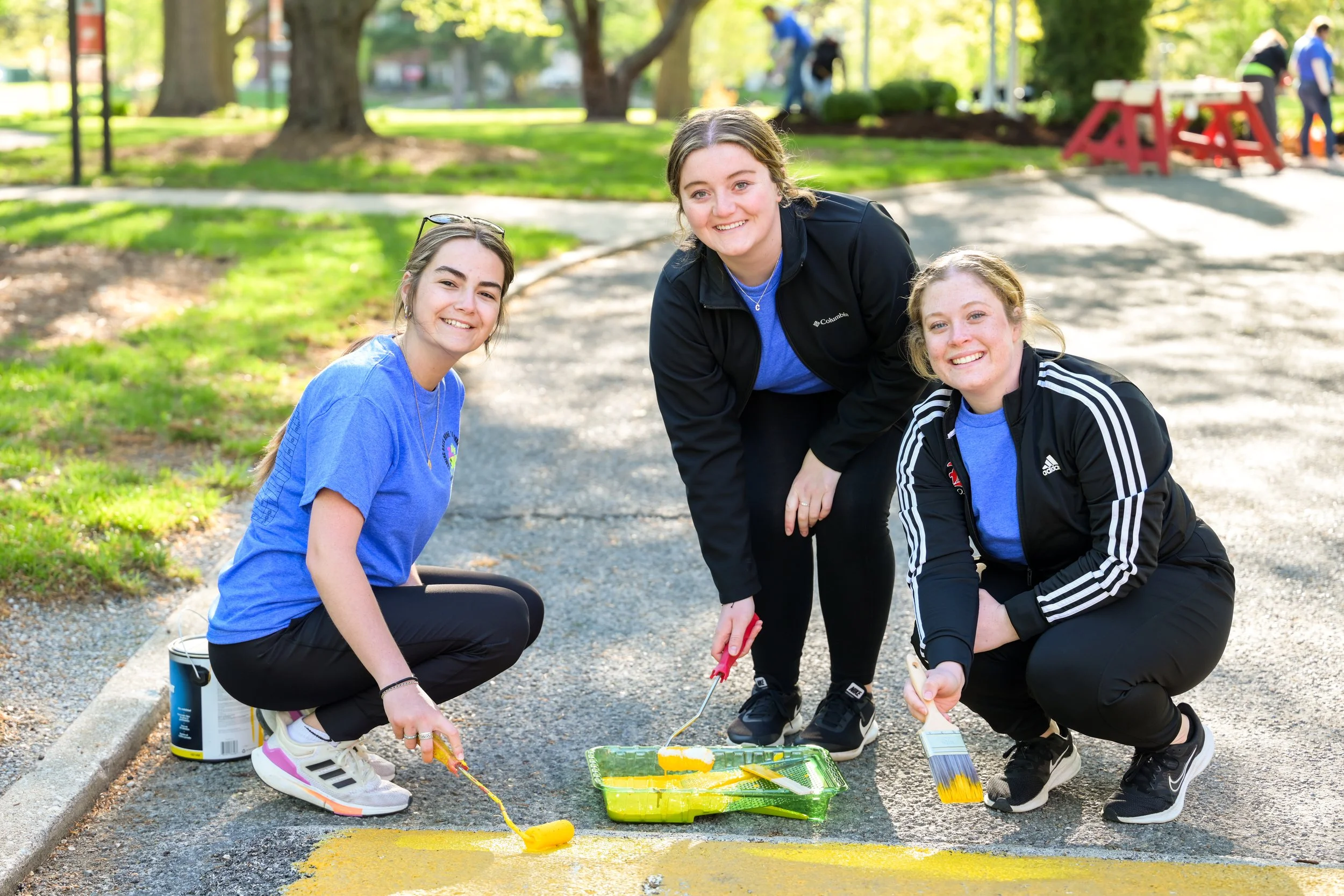
Blackburn students during Beautification Day on campus.
The ELC Knowledge Base was where many of these clarifications happened. Early in the design process, I spent considerable time reading syllabi and resources that colleagues across the Collaborative had contributed. The Knowledge Base did exactly what I think it was designed to do: it shortened my path from question to working draft. Reading what other people had already tried, and seeing where they had landed, made the project feel less like inventing and more like co-creating with colleagues.
In Fall 2026, the course will launch as LE123: The Blackburn Experience—a required two-credit course that meets twice weekly across the first semester. It is grounded in positive psychology, but the part of positive psychology I have been most drawn to is the part that is honest about how hard flourishing actually is, especially for students who are first-generation, low-income, or bringing with them experiences that traditional college culture does not always know how to make room for. The course is built around three parts: helping students recognize their own character strengths and how this connects to their flourishing; treating belonging as something that requires specific conditions rather than something that just happens; and using the rhythm of the first semester to introduce skills, reflections, and connections at the moments students most need them.

The longer-term ambition is bigger than one course. Blackburn is entering a major redesign of its general education program in the coming year, and LE123 is a proof of concept. If flourishing and belonging can serve as organizing principles for the first year, they can serve as organizing principles for the broader liberal arts curriculum. That is the argument I now have language to make on my own campus—language I did not have a year ago, before this Collaborative began shaping how I think about the relationship between the disciplines we teach and the lives our students are trying to build.
Mark Hopper, Ph.D., is Professor of Psychology and lead on the FYE Core Team at Blackburn College.