UNITY Project at Randolph College
In September 2025, with funding from an Endeavor Grant, Randolph College hosted the UNITY Project, a unique and interactive art installation. The UNITY Project was developed in 2016 by Nancy Belmont, who “felt compelled to create a community project that promotes human connection, an appreciation of diversity, and a realization that we all have something in common”, during a time of much social strife in the United States. Her goal was to bring people together and help participants see and understand how much we have in common in terms of identities and life experiences, rather than focusing on ideological differences.
This Project has been recreated at hundreds of colleges and universities across the US since 2016 and has connected tens of thousands of people with the principles of community and understanding others. While several Randolph faculty and staff initially hosted this project in 2017, this year Dr. Danielle Currier organized the Project with support from the Randolph Building and Grounds staff and Arielle Barfield, Program Coordinator in the Intercultural Center at Randolph.
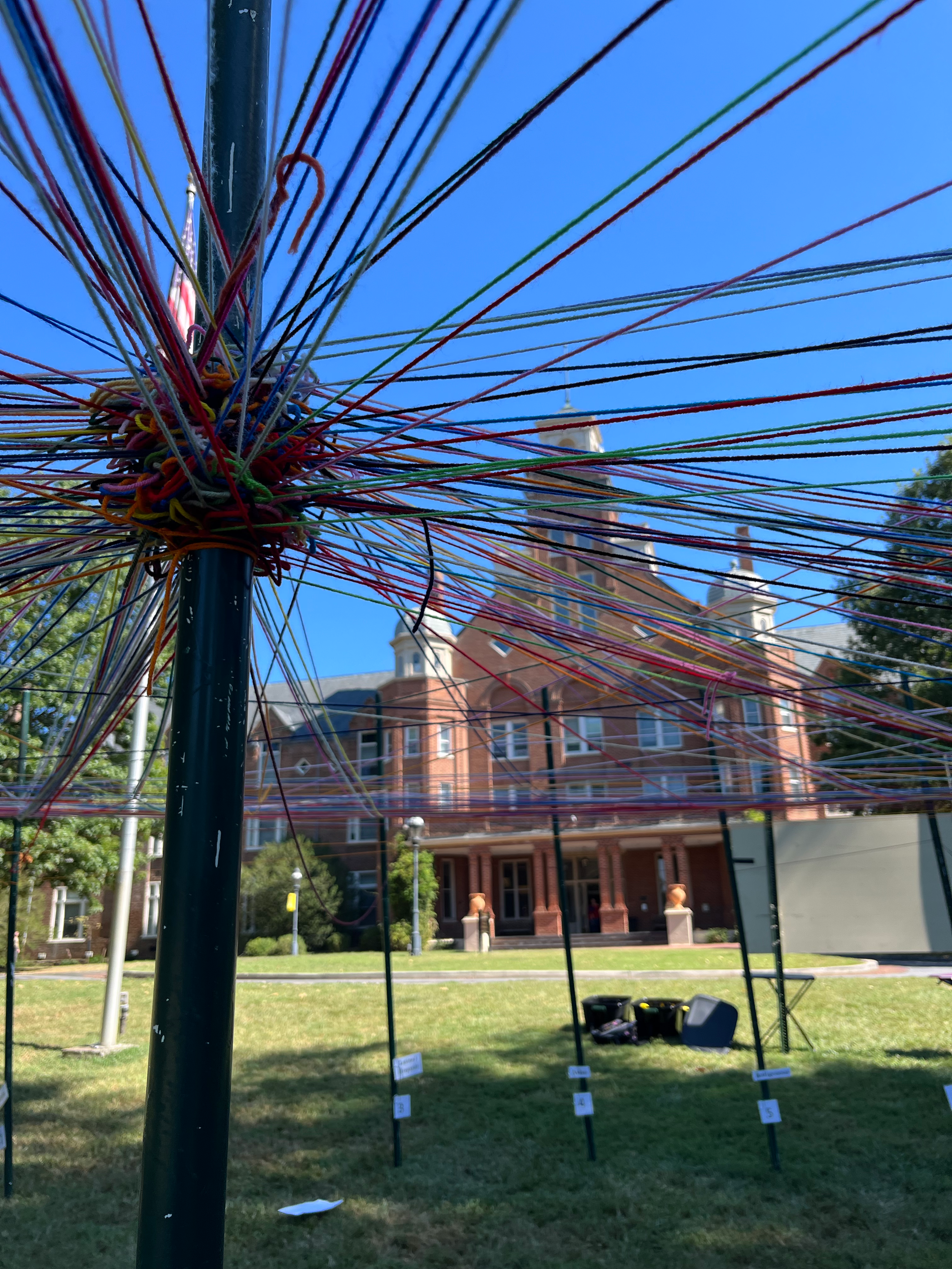
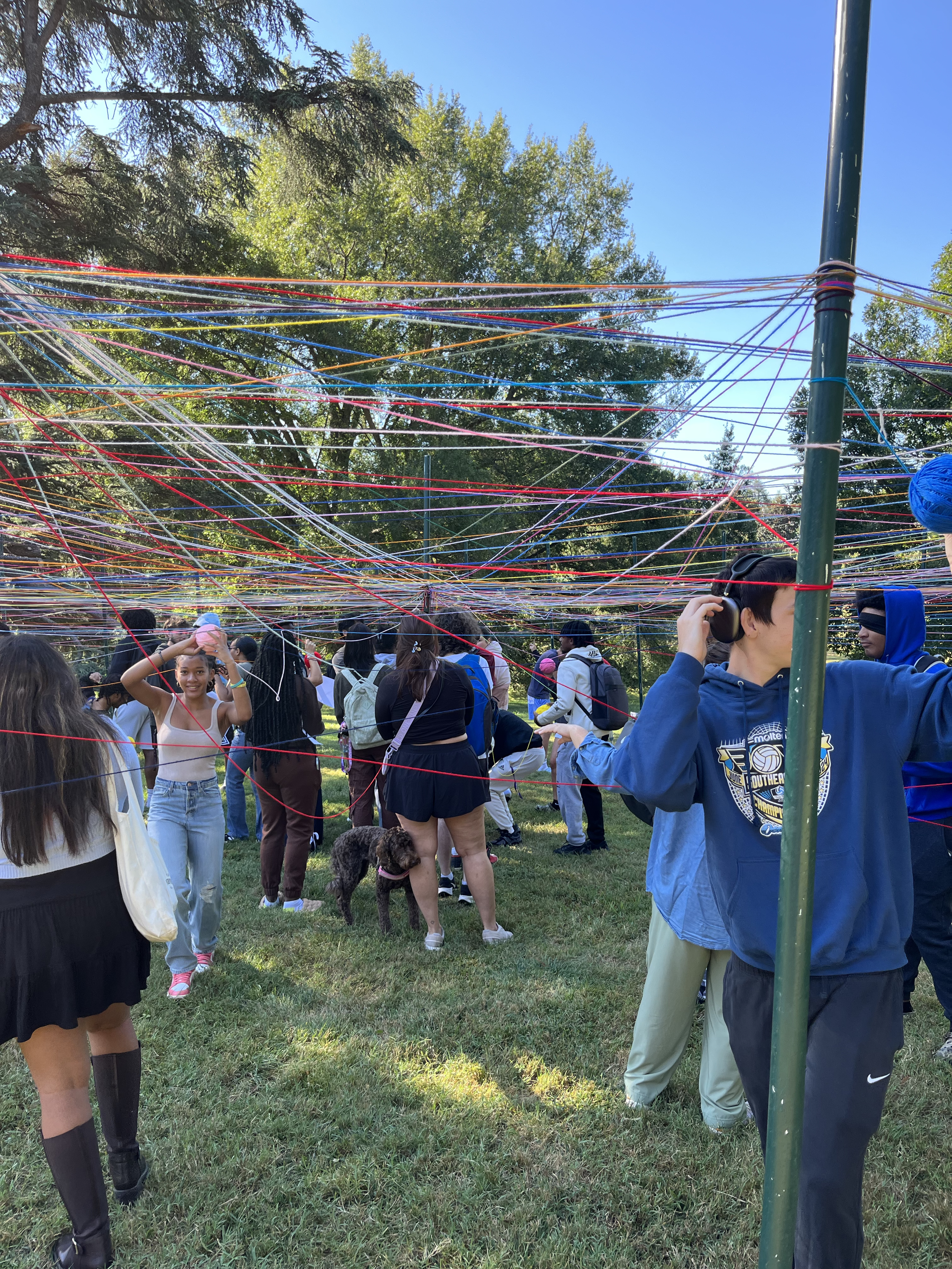
The Project is designed to encourage people to interact with each other while simultaneously figuring out their own unique path through the installation. The Project was initially set-up so there was a large circle of 32 poles with one pole in the center. Each of the poles on the outer circle had an identity label on it, all related to broad social categories with which we all identify – race, class, gender, sexuality, geographic region, religious/spiritual affiliation, etc. Examples of identity labels are “White”, “African-American or Black”, “Urban”, “Rural”, “Suburban”, “Straight”, “Queer”, “Cis-gender”, “Non-binary”, “Middle-class”, “Working-class”, “Christian”, “Muslim”, “Spiritual”, etc.
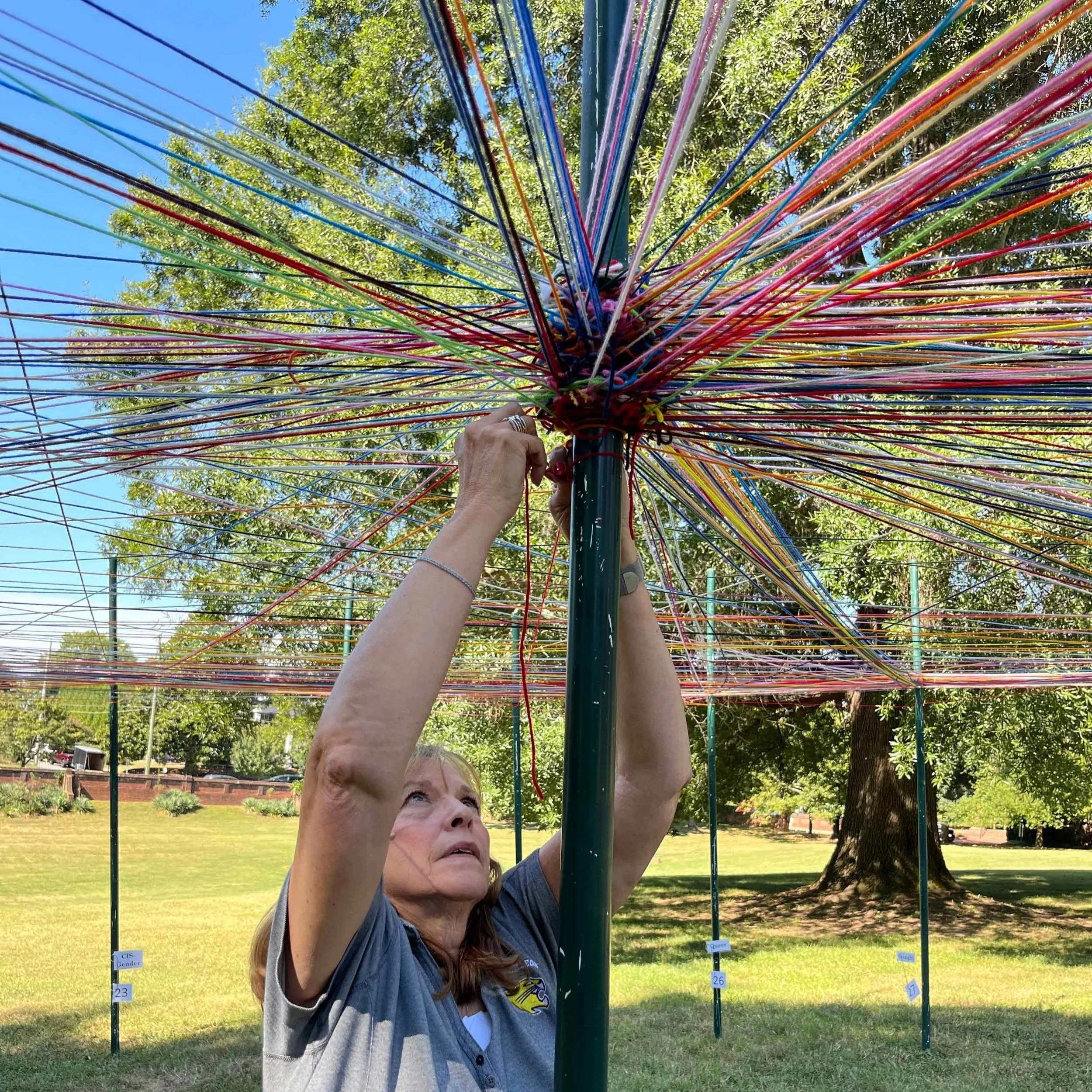
Each participant got a ball of yarn to use in their journey through the installation. The original Project used pink yarn, but at Randolph we provided multiple colors of yarn to signify the diversity in our student body and the importance of understanding each others’ experiences and identities. Each person tied their yarn to the middle pole to show that they are part of the wider community. Then they walked around the circle and wrapped their yarn around each pole that signifies part of their identity. Because our goal is to engage with each other and create a complex multi-colored web, we asked that people walk back and forth across the circle, rather than wrapping their yarn on poles next to each other. This created a multifaceted canopy of color above all our heads. Ultimately, this web revealed the ways we are interconnected and tied to each other; while also showing the ways we are unique individuals with our distinctive personalities and experiences.
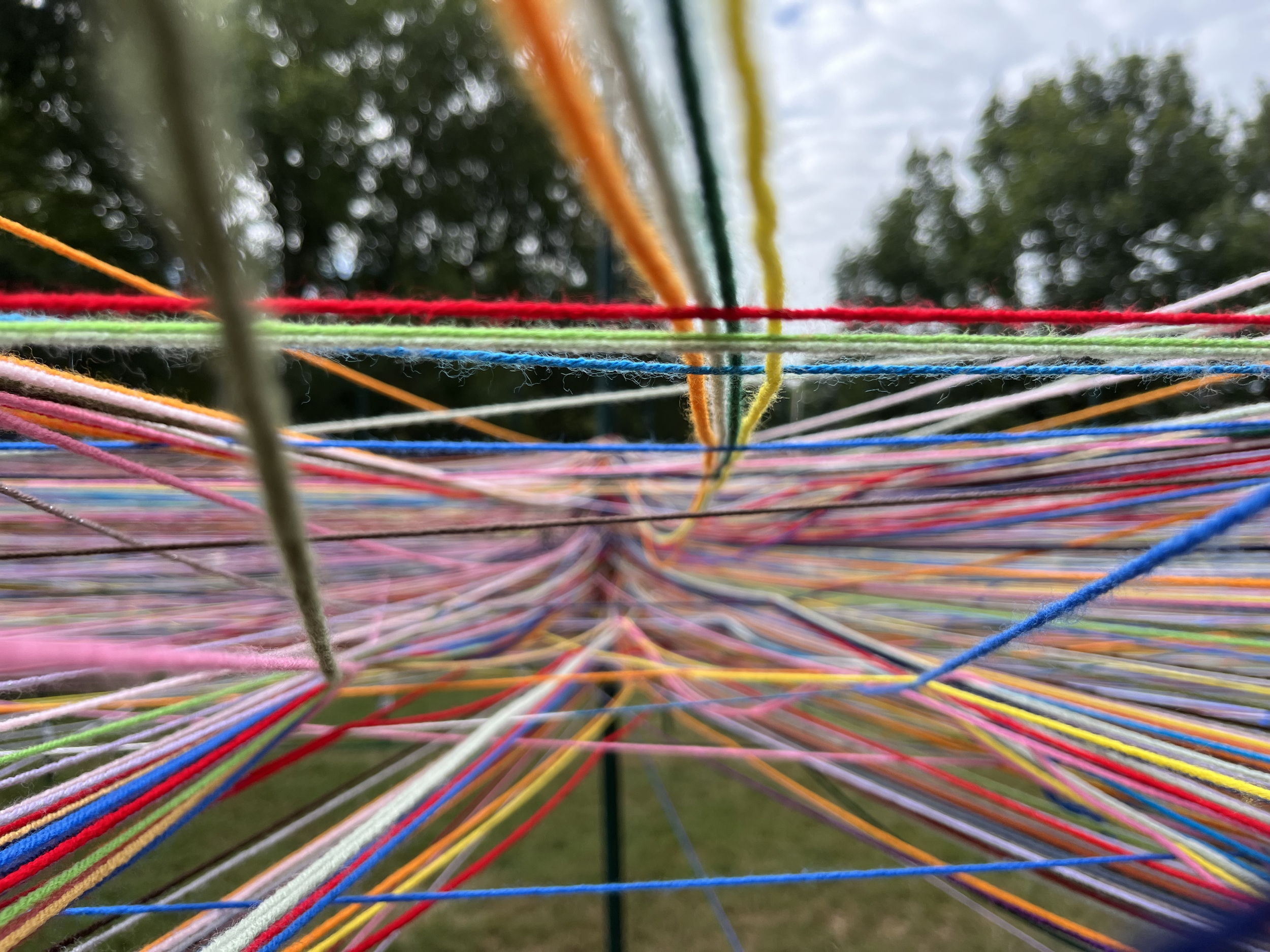
This year, over 500 students, faculty, and staff at Randolph College participated in the Unity Project. While predominantly intended for and targeting the first year class, as an activity in the First Year seminar at Randolph, many upper-class students, faculty, and staff were interested and inspired to participate. It is a very personal activity, and many students reported being inspired to initiate conversations about their life experiences as they moved through the activity and encountered the commonalities they share with one another.
Randolph College (founded as Randolph Macon Woman’s College in 1891) is a very small liberal arts college located in Lynchburg, Virginia. It is a diverse and close-knit community and is known for the supportive relationships between students and faculty and staff. The highly dedicated and talented faculty who chose to be at this unique school share a love for teaching, learning, and mentoring and are often both professional and personal mentors to the students who are in their classes or participate in the student groups they advise. Staff members at Randolph are also known for their dedication to student growth and contributing to rich personal connections on the campus. This year’s center pole, with all the yarn attached, is on display at the Intercultural Center and will be a permanent piece of art showing the interconnection of our community.
Randolph last did the project in 2017, and over 1,000 people from the College and the Lynchburg community shared in creating a huge mosaic of colors, representing the diversity of both the College and the Lynchburg community. In 2017, the Project was organized by Dr. Danielle M. Currier (Chair and Professor of Sociology) in coordination with Hermina Hendrix, who worked in the Dean of Students office.
Going forward, this Project will become a yearly event for the first-year class. The labels placed on each pole will reflect the demographics and identities of the incoming class. Dr. Currier will collaborate with the Intercultural Center to organize and stage this event in the first few weeks of the Fall semester. All members of the College and Lynchburg community members will continue to be welcome to participate in this installation. In a time of conflict and contentious discussions about social and personal identities, this Project is a positive way for community members to interact and come together over their commonalities.