|
The Endeavor Lab Colleges Newsletter is your one stop source for news, project updates, funding opportunities, and events. ͏ ͏ ͏ ͏ ͏ ͏ ͏ ͏ ͏ ͏ ͏ ͏ ͏ ͏ ͏ ͏ ͏ ͏ ͏ ͏ ͏ ͏ ͏ ͏ ͏ ͏ ͏ ͏ ͏ ͏ ͏ ͏ ͏ ͏ ͏ ͏ ͏ ͏ ͏ ͏ ͏ ͏ ͏ ͏ ͏ ͏ ͏ ͏ ͏ ͏ ͏ ͏ ͏ ͏ ͏ ͏ ͏ ͏ ͏ ͏ ͏ ͏ ͏ ͏ ͏ ͏ ͏ ͏ ͏ ͏ ͏ ͏ ͏ ͏ ͏ ͏ ͏ ͏ ͏ ͏ ͏ ͏ ͏ ͏ ͏ ͏ ͏ ͏ ͏ ͏ ͏ ͏ ͏ ͏ ͏ ͏ ͏ ͏ ͏ ͏ ͏ ͏ ͏ ͏ ͏ ͏ ͏ ͏ ͏ ͏ ͏ ͏ ͏ ͏ ͏ ͏ ͏ ͏ ͏ ͏ ͏ ͏ ͏ ͏ ͏ ͏ ͏ ͏ ͏ ͏ ͏ ͏ ͏ ͏ ͏ ͏ ͏ ͏ ͏ ͏ ͏ ͏ ͏ ͏ ͏ ͏ ͏ ͏ ͏ ͏ ͏ ͏ ͏ ͏ ͏ ͏ ͏ ͏ ͏ ͏ ͏ ͏ ͏ ͏ ͏ ͏ ͏ ͏ ͏ ͏ ͏ ͏ ͏ ͏ ͏ ͏ ͏ ͏ ͏ ͏ ͏ ͏ ͏ ͏ ͏ ͏ ͏ ͏ ͏ ͏ ͏ ͏ ͏ ͏ ͏ ͏ ͏ ͏ ͏ ͏ ͏ ͏ ͏ ͏ ͏ ͏ ͏ ͏ ͏ ͏ ͏ ͏ ͏ ͏ ͏ ͏ ͏ ͏ ͏ ͏ ͏ ͏ ͏ ͏ ͏ ͏ ͏ ͏ ͏ ͏ ͏ ͏ ͏ ͏ ͏ ͏ ͏ ͏ ͏ ͏ ͏ ͏ ͏ ͏ ͏ ͏ ͏ ͏ ͏ ͏ ͏ ͏ ͏ ͏ ͏
How does collaboration fuel wellness and innovation?
Dr. Lori Collins-Hall joins Dr. Jodi Blinco on the EdUp Experience Podcast this week to share insights from the Endeavor Lab Colleges Collaborative. Together, they discuss the critical role of liberal arts education in preparing students to navigate increasingly complex futures.
|
Introducing Compass Year at St. John’s: A New Space for Reflection, Purpose, and GrowthJAIME DUNN, PHD, DIRECTOR OF CAREER DEVELOPMENT,
ST. JOHN’S COLLEGE (MD) SABINA SULAT, AUTHOR, FOUNDER OF RE:
WORKING AND COMPASS PROGRAM CONSULTANT
|
This year marked the inaugural launch of the Compass Year Program at St. John’s College, a new initiative designed to help students better understand themselves as learners, thinkers, and emerging adults. Created to support self-discovery alongside academic life, the program invites students to reflect on what matters to them, what motivates them, and how their strengths and patterns show up in their studies and in the wider world.Over the course of the year, students engaged in conversations and activities centered on values, purpose, personal strengths, and growth. Through vision boards, discussions of “Why,” the Life Atlas Gifts Inventory, coaching conversations, and group reflection, Compass offered students a rare opportunity to step back and ask larger questions about who they are and how they want to move through their St. John’s experience.What has worked especially well in the unique St. John’s environment is the way Compass complements the College’s culture of inquiry. Students are already accustomed to asking big questions in seminar; Compass gave them a place to turn some of those questions inward. This structure aligns seamlessly with the core of the college’s seminar program and the Socratic Method—shifting the focus of inquiry to the students themselves. By placing their own wants, needs, and desires directly into the conversation, the program empowers them to navigate their education with the same rigor they apply to the Great Books.Crucially, the program has opened the doors for students to have these vital passion and purpose discussions directly with one another. By moving these conversations into a dedicated peer space, Compass ensures that reflection isn't something happening solely with counselors, staff, or parents, but is a shared experience within the student community itself. While originally designed for sophomore students, the program’s resonance became clear as it was embraced by students across all class years, including those in the Graduate Institute. The most meaningful success of the program has been watching this diverse range of students engage in these open, honest small-group discussions about what motivates them in both their academic and personal lives.As a pilot-year program, Compass has also been a learning experience for its facilitators. Student feedback has helped shape the program as it has developed, and there are already plans to make it more accessible and effective next year. Even in its first year, Compass has demonstrated the value of creating intentional space for students to connect self-knowledge with academic growth. The Compass Year Program has shown that reflection is not separate from education—it is an essential part of it.
|
|
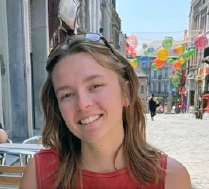
Andreigha Kraemer, Endeavor Presidential
Student Fellow
|
|
|
Andreigha Kraemer is a fourth-year student in Human Ecology at the College of the Atlantic (COA) and serves as an Endeavor Presidential Student Fellow. Andreigha's academic journey is a testament to the interconnected educational experience offered by the liberal arts; weaving together passions in environmental law, sound studies, and ceramic sculpture as she navigates her academic journey. Whether she is leading outdoor expeditions or engaging in student leadership, Andreigha loves bridging the gap between student needs and institutional programming. She likes to leverage her leadership experience at COA and through her work with the Endeavor Lab Colleges to serve as the "glue" between diverse communities and ensure student perspectives help drive meaningful change. Outside of her leadership roles, you can find Andreigha exploring new musical genres or enjoying the water--whether she is canoeing, kayaking or swimming.
|

|
Scotti Norman, Assistant Professor of Material Culture and Archaeology, Warren Wilson College
|
|
|
Dr. Scotti M. Norman is an anthropological archaeologist who studies the creation and origins of systemic inequality in the Americas. Specifically, she is interested in how archaeology–a field with a deep colonial history–can be used to promote social justice through community-based participatory research. In practice, this means working with communities to achieve their goals and to cast herself in the role of co-conspirator rather than primary investigator.By training, she is a landscape archaeologist, meaning she studies the deep interconnectedness between people and place through time. Scotti has served as Warren Wilson’s representative to the Placed-based Experiential Learning and Mapping Belonging work group since January of 2024. She has provided strong leadership in the working group, including providing an early webinar style workshop for her Endeavor Lab Colleges colleagues on how to use ArcGIS Story Mapping in their Mapping Belonging projects.Scotti offers these reflections on her experience in this work: “Working on the Mapping Belonging project has allowed me to channel my preexisting interests in social justice into making Warren Wilson College a more socially sustainable place through the elevation of Indigenous histories on campus. Additionally, the support from the Endeavor Lab Colleges has been incredibly valuable in connecting me with other brilliant scholars doing methodologically similar projects. These collaborations with other colleges have prompted new ideas, technological troubleshooting, and above all, a supportive community of scholars working for the public good. Too often, scholars are siloed at their respective institutions–work with the Endeavor Lab Collaborative allows the rare opportunity to make connections across the United States”.If you know someone or a program at your institution that you would like to be highlighted, please contact ELC@sterlingcollege.edu.
|
Responding in a Mental Health Emergency
Wednesday, April 16, 2026 | 11:00 AM -12:00 PM ETThis course is designed for anyone who wants to feel more confident supporting someone experiencing a mental health crisis. Whether you’ve encountered a frightening situation before or worry you might face one in the future, this training focuses on practical, real-life responses. You’ll learn how to recognize when someone is struggling, respond calmly and compassionately without making the situation worse, and know when it’s time to seek additional help.
|
The ELC has partnered with Mindspring Mental Health Alliance to offer free resources to our community. While we will periodically host some synchronous and asynchronous webinars in collaboration with Mindspring, you can access a complete list of their upcoming webinars here.
|
Endeavor Dialogues 2026
The ELC’s Annual Presidents Meeting
April 20-22, 2026
Randolph College, Lynchburg, VA
|
The Curriculum working group has finished with a formal articulation of the intersection of mental health well-being, belonging, purpose, and the liberal arts–“Framing Well-Being & Whole-Person Education in the Liberal Arts.” As our campuses continue to navigate questions of student and community well-being, this document serves as a vital, forward-looking framework for our work. Rather than treating student well-being as purely a mental health concern, this paper offers a compelling case that our small liberal arts colleges are uniquely positioned to integrate well-being with “whole-person education” to facilitate well-being, belonging, and purpose directly into the academic core of our institutions. This document will also continue to inform curriculum mapping on each campus.The Community Care and Community Resilience (CC&CR) working group continues its work on the development of Peer Educator training materials and toolkit to share across the Collaborative. The group has also met with Nance Roy of the JED Foundation for a discussion of institutional policy development, most recently postvention planning and is planning a shared Community Resilience Model (CRM) training for June.The Purposeful Life and Work group has begun construction of the Virtual Center for Purposeful Life and Work. This will serve as a collaborative resource, supporting students in the pursuit of meaningful work and life. As part of their work, they are working with some critically supportive partners outside the ELC to enhance our access and affordability across the Collaborative to Career and Life Readiness resources.This month, Mapping Belonging is fully engaged in the workshopping and production of their maps. These maps demonstrate an exciting mix of modalities and styles that reflect the unique social, cultural, and ecological contexts of the ELC campuses. The groups continue to learn from each other and seek to identify shared resources, artists, print companies, and tools to assist with continued project development over the Spring term. Additionally, the group continues to explore opportunities to weave Mapping Belonging more intentionally into other areas of well-being work across each campuses’ Endeavor initiatives.The Nature Rx working group continues to share members’ and institutional expertise around physical, natural, and creative practices to support student and community mental health and wellness. They are actively involved in sharing biweekly knowledge nugget presentations and resources with each other. These knowledge nuggets will also be available to all members of the Collaborative through the ELC knowledge base.Our group of Student Fellows are deeply immersed in supporting mental health and student engagement across their campuses. They are actively considering the campus and collaboratively developing short project proposals to access seed money to support those projects on your campus. Stay tuned!
|

|
Thrive and Live offers free culturally responsive, trauma-informed toolkits to support well-being for marginalized individuals and families. ”Fueled by compassion and rooted in lived experience” they believe mental health and wellness is a human right, not a privilege. Their Mission is to empower underserved communities to thrive emotionally, socially, and mentally—through holistic programs, culturally responsive care, and transformative advocacy. |
|
|
Join the ELC Wellness Movement!
|
Connect with your campus liaisons or the Project Director.Support the work on your campus!
|
|
|
|